

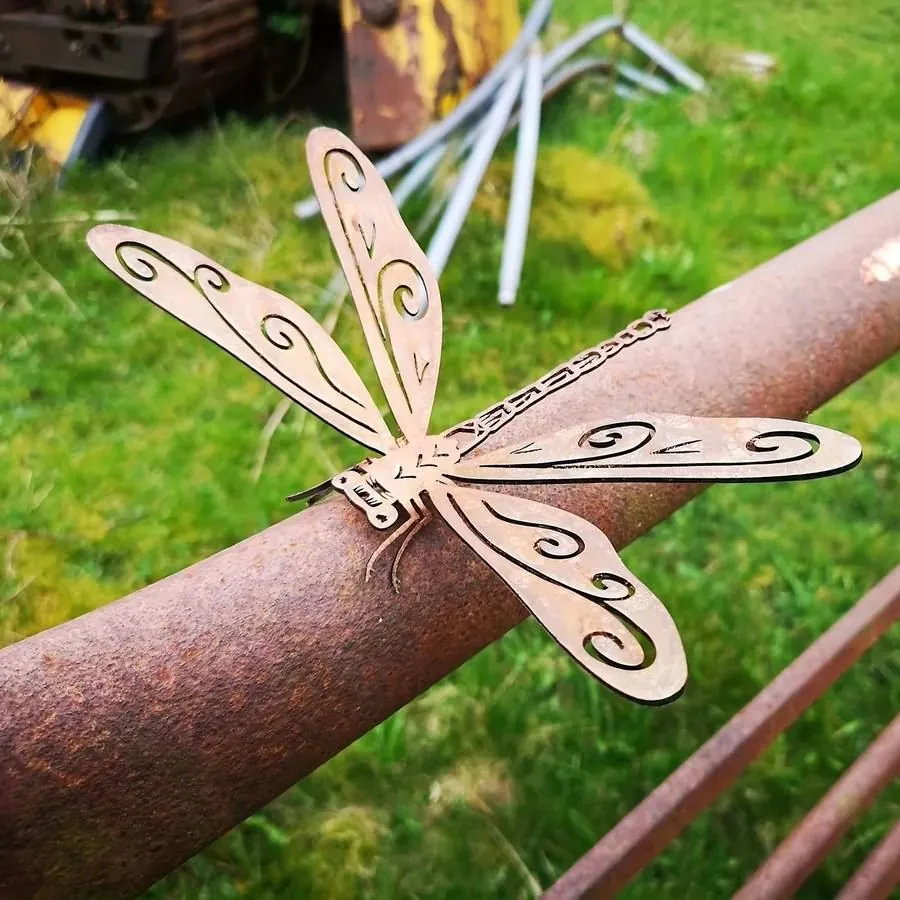
Quick answer: Genuine antique pieces show wear where hands and weather actually reach - rims, high points, the base - while applied patina is even all over. A good reproduction is worth having; just buy it knowing what it is, and let a British winter do the rest of the work for you.
Almost everything sold as vintage in a garden centre is new. That is not a scandal, but it is worth knowing, because it changes what you should be looking at.
Genuine age versus applied age
The difference is where the wear is.
Real weathering is uneven and logical. Rain hits the top and the windward face hardest. Hands touch rims and high points. Bases sit in damp and go darker and rougher than the rest. Lichen forms where it is shaded and damp, not on the sunny south face.
Applied patina is even. A uniform grey-green wash over the whole piece, including the underside and the sheltered recesses, is a finish rather than a history.
Neither is wrong. But paying an antique price for an applied finish is, so it is worth ten seconds of looking.
What else gives it away
- Mould seams. A visible seam line means a modern casting.
- The base. Genuine old pieces are usually worn, chipped and irregular underneath. New ones are flat and clean.
- Weight. Old garden pieces are stone, cast stone or metal, and they are heavy. A light "antique" is resin.
- Damage that makes sense. Old chips are on corners and edges. Chips in protected recesses were made deliberately.
The resin guide covers telling cast materials apart, and the stone guide covers how real stone ages.
Why reproductions are usually the better buy
This is the honest position.
Genuine antique garden ornaments are expensive, heavy, often fragile, and frequently in worse condition than the photograph suggests. They are also stolen more than anything else in a garden.
A good reproduction gives you the same shape and the same effect, costs a fraction, can be replaced if it is damaged, and does not need worrying about. And it will weather genuinely over time, so in ten years the patina will be real.
Buy the look. Be honest with yourself that it is the look.
What makes a reproduction convincing
Uneven finish. Variation in tone, some darker recesses, some lighter high points. Uniformity is what reads as fake.
Softened detail. Real weathering blurs edges. Crisp, sharp modelling everywhere looks new whatever colour it is.
The right material. Cast stone reproductions age convincingly because they are genuinely porous and will grow real lichen. Resin will not - it stays exactly as it is, which is why a resin "antique" never quite improves.
Restraint in the colour. Heavy green wash reads as a product. Subtle grey-brown with a hint of green reads as time.
Weathering a piece yourself
A British garden does most of this for you, and it does it better than any factory.
To speed it along on cast stone or concrete:
- Put it somewhere shaded and damp. North-facing, under a tree, near a hedge. Algae and lichen need moisture and low light.
- Keep it slightly damp. Under a shrub where drips land is ideal.
- The yoghurt trick. Natural yoghurt thinned with water, brushed on, encourages algal growth. It works, slowly, and it is genuinely what people have always done.
- Then leave it alone. The one thing that undoes it all is cleaning.
Do not try this on resin. It is non-porous, so nothing will take hold and you will just have a dirty ornament.
The look, and what goes with it
Vintage-style pieces suit informal, mixed, slightly overgrown planting. They look best half-swallowed - a figure with ivy at its feet, an urn with something spilling over the rim.
Which is convenient, because it is also the low-maintenance version of a border.
Where they struggle is in very tidy, formal or contemporary spaces, where an aged piece reads as neglect rather than as history. The contemporary versus traditional guide covers deciding which register your garden is in.
Materials that age well
Cast stone and concrete are the best. They are porous, take lichen, and genuinely improve - see the statues range.
Weathering steel ages by design, and the colour deepens for a year or two before settling - the weathering steel guide covers it.
Wood silvers beautifully if it is kept off the ground - the wood guide covers protecting it.
Resin does not age, it only fades - the fading guide covers slowing that down.
Looking after an aged piece
Mostly by not doing much.
Do not pressure wash, do not bleach, and do not scrub the lichen off. All three remove exactly what you paid for, and on porous material they open up the surface so it deteriorates faster afterwards.
Do keep it off the ground and out of standing water, which is a structural concern rather than a cosmetic one.
Browse vintage and rustic pieces, statues and sculptures and unusual ornaments, with more in the complete guide and the unusual ornaments guide.
The short version
- Real weathering is uneven and logical; applied patina is even, including in sheltered recesses.
- Mould seams, a flat clean base and low weight all mean a modern casting.
- Reproductions are usually the better buy - cheaper, replaceable, and they weather for real.
- Cast stone and concrete take genuine lichen; resin never will, so it cannot age.
- Do not pressure wash or bleach an aged piece - you remove exactly what you paid for.
Frequently asked questions
How can I tell if a garden ornament is genuinely old?
Look at where the wear is. Real weathering is uneven and logical - rims and high points worn, base darker and rougher, lichen only where it is shaded and damp. An even wash over the whole piece is a finish, not a history.
Are antique-style reproductions worth buying?
Usually more sensible than genuine antiques, which are expensive, heavy, often fragile and frequently stolen. A good reproduction gives the same effect, can be replaced if damaged, and will weather genuinely over the years.
How do I make a new ornament look old?
Put it somewhere shaded and damp, keep it slightly wet, and leave it alone. Natural yoghurt thinned with water and brushed on encourages algae. It only works on porous materials such as cast stone or concrete, never on resin.
What makes a reproduction look convincing?
Uneven tone with darker recesses and lighter high points, slightly softened detail rather than crisp modelling everywhere, and restrained colour. Heavy uniform green wash is what reads as a product rather than as age.
How should I clean an antique-style ornament?
As little as possible. Pressure washing, bleach and scrubbing all remove the patina and lichen you were paying for, and on porous stone they open the surface so it deteriorates faster afterwards. A dry brush is usually enough.