



Quick answer: A small ornament works when it is lifted to eye level, set against something plain, and placed where people already pause. Groups of three at different heights read better than one lost in a border, and anything below knee height needs a hard surface around it to be seen at all.
Small ornaments are the ones people buy most and enjoy least, almost always for the same reason: nobody can see them.
The problem is height, not size
A 15cm ornament on the ground is competing with every leaf around it. By June it has gone.
The same piece on a wall top, a post, a step or an upturned pot is instantly visible, and looks deliberate rather than dropped. Height is the whole fix, and it costs nothing.
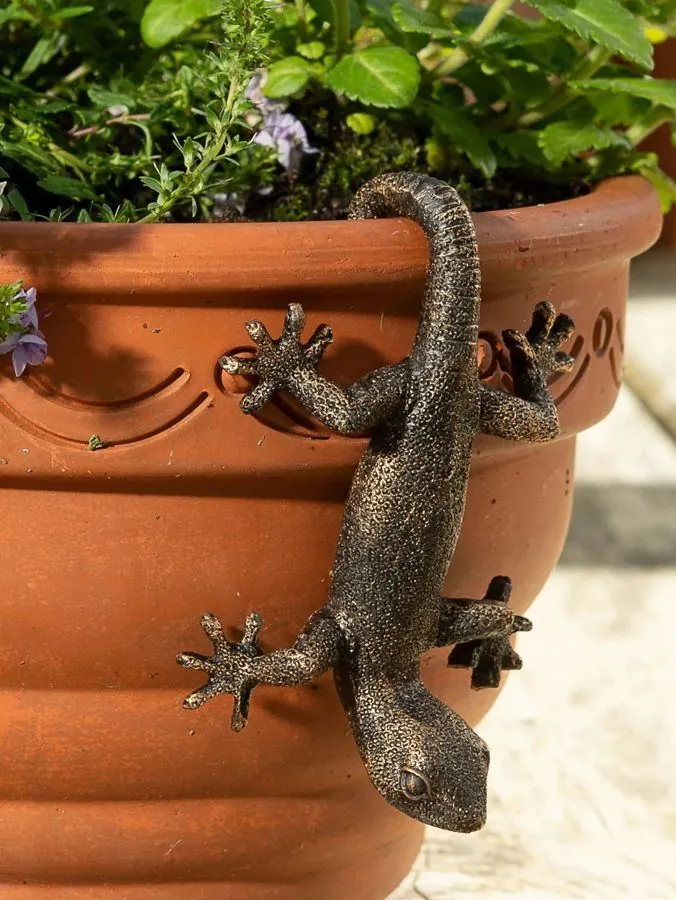
Useful surfaces most gardens already have: the top of a low wall, a fence post, a windowsill, the edge of a raised bed, a doorstep, a tree stump, the rim of a large planter.
Give it a hard surface
If a small ornament must go at ground level, it needs something plain immediately around it - gravel, paving, bark, a stone slab.
Planting swallows small objects. A pocket of gravel around a low piece gives the eye somewhere to land, and it stops the ornament being buried by whatever grows next to it in July.
This is also why small pieces look so good in fairy gardens and container arrangements - the container is the plain surface.
Three, not one
Small ornaments break the rule that applies to large statement pieces.
One small ornament in a big garden reads as an accident. Three, at different heights, in a loose triangle rather than a row, reads as a considered group. Odd numbers look settled; pairs look formal and fours look like a set.
Vary height aggressively - one on the ground, one on a low wall, one hanging. Keeping them all at the same level is what makes a group look like stock.
Put them where people slow down
Small things only work at close range, so put them where someone is already standing still.
- Beside the back door, where you pause with a cup of tea.
- At a turn in a path, where you change direction anyway.
- By a bench or a seat.
- Along a step or a threshold.
- On a shelf by a shed or greenhouse door.
Nobody notices detail while walking down a straight path. They notice it while waiting for a kettle.
Use vertical surfaces
A small garden is mostly boundary, and boundaries are free real estate.
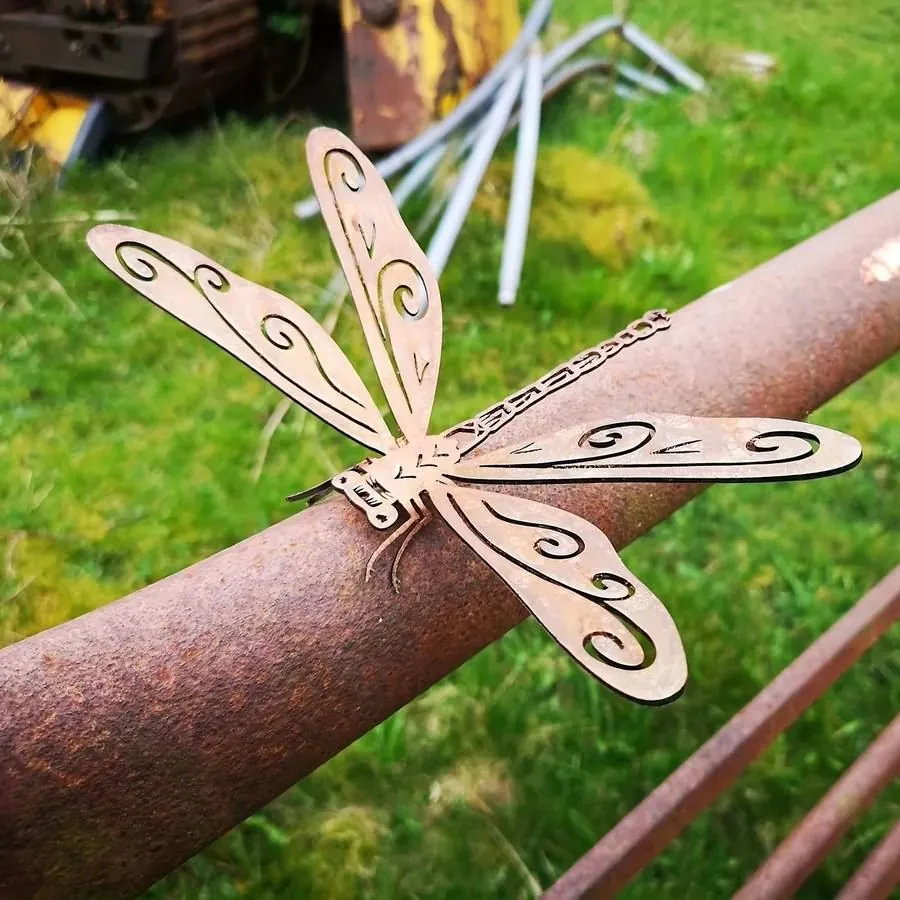
Wall and fence pieces give you presence with no footprint at all, which is exactly what a small space needs - the wall and hanging guide covers the fixings, and the wall and hanging range has the pieces.
A pot-hanger ornament is a neat trick here: it uses the rim of a container you already own, so it takes no space at all.
Light does the heavy lifting
Small ornaments benefit from lighting more than large ones do, because light gives a small thing significance that its size cannot.
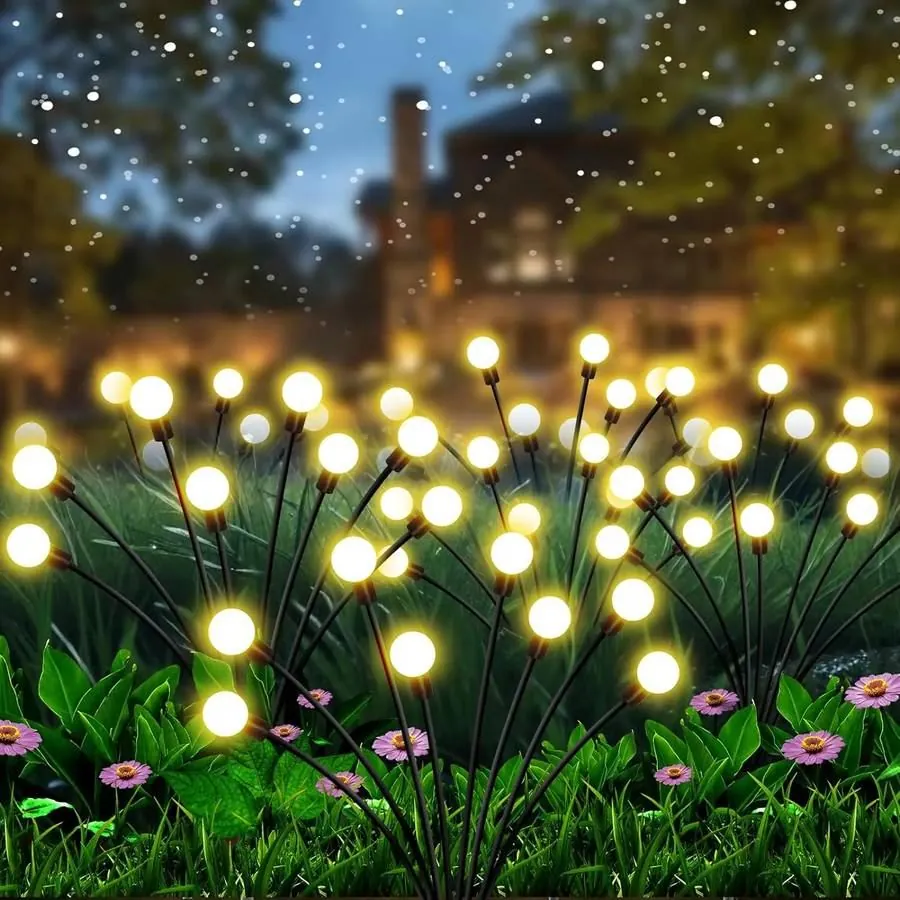
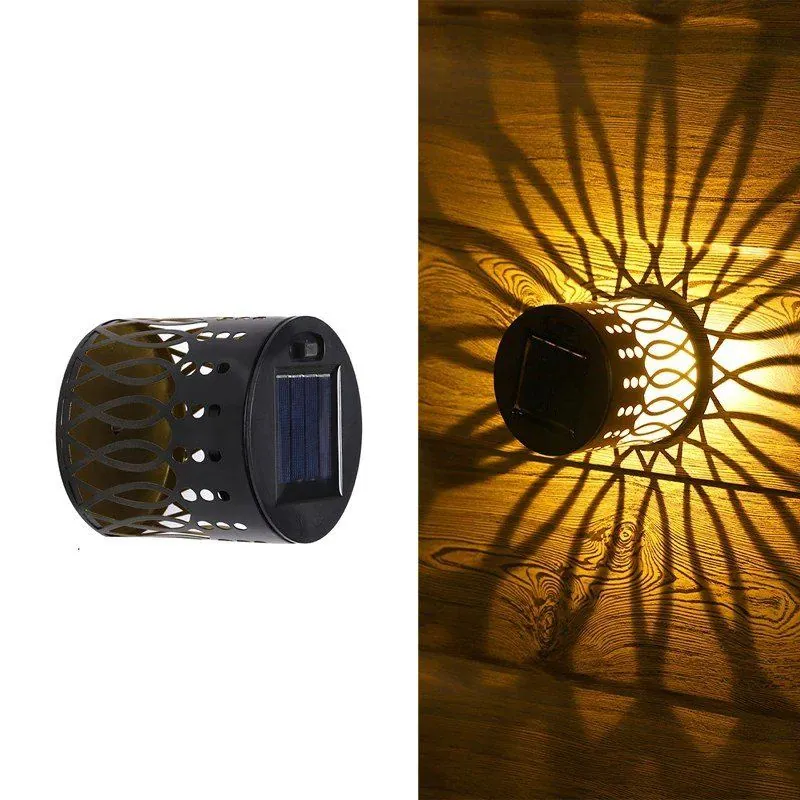
Low stake lights among planting, or a light near a group, mean the arrangement still exists at seven in the evening. The solar guide covers what to expect through the year, and the solar range is where to look.
Buying well at this size
Small ornaments are cheap enough to buy on impulse, which is exactly why gardens end up cluttered. Two things keep it under control.
Repeat a material. Six small pieces that are all metal, or all stone-effect, read as a collection. Six in six materials read as a jumble - the materials guide covers what each one does.
Watch the detail. Fine painted detail is what fades first outdoors, and there is proportionally more of it on a small piece. Somewhere with a little overhead shelter keeps colour years longer.
What small pieces do best
They add up close where a large piece cannot: on a table, by a door, at a bend. They fill the gaps a statement piece leaves.
And they suit gifts, because they do not commit the recipient to a spot - the gift guide has more, and the unusual ornaments guide covers the quirkier end.
Where they go wrong
Two failure modes account for almost every disappointing small ornament.
Spreading them out. One here, one there, one by the shed. Scattered small pieces read as untidiness rather than decoration, because nothing accumulates into anything. Grouping is what turns five small objects into one deliberate thing.
Buying them faster than you place them. Small ornaments are cheap, which makes it easy to acquire a dozen without ever deciding where any of them go. Then they end up wherever there was room, which is not the same as where they work.
A simple discipline helps: decide the spot before you buy the piece. If you cannot name where it is going, you are buying it because it was nice rather than because you needed it there.
Browse unusual and unique pieces, funny and novelty and metal ornaments, with more in the complete guide.
The short version
- Small ornaments fail by disappearing - height at eye level is the whole fix.
- At ground level they need gravel or paving around them, or planting swallows them.
- Three at different heights in a loose triangle beat one placed on its own.
- Put them where people already stop: the back door, a turn in a path, a bench.
- Repeat one material across small pieces, or a collection reads as a jumble.
Frequently asked questions
Why do my small garden ornaments look lost?
Almost always height. A small piece at ground level competes with every leaf around it and disappears by midsummer. Lift it onto a wall top, post, step or planter rim and it reads instantly, without costing anything.
How many small ornaments should I group together?
Three, at genuinely different heights, in a loose triangle rather than a row. Odd numbers look settled while pairs look formal and fours look like a set. Keeping them all level is what makes a group look like shop stock.
Where do small garden ornaments work best?
Wherever people already stand still - beside the back door, at a turn in a path, by a bench, along a step. Detail only registers at close range, and nobody notices it while walking down a straight path.
How do I stop small ornaments looking cluttered?
Repeat one material across them. Six small pieces all in metal or all in stone-effect read as a deliberate collection, while six in six different materials read as a jumble however nice each one is on its own.
Do small ornaments fade faster outdoors?
The painted detail does, because there is proportionally more fine paint on a small piece and less of it to lose. A spot with some overhead shelter, under a shrub or the edge of a roof, keeps the colour years longer.