




Quick answer: Wall ornaments for the garden turn bare fences and walls into features without stealing floor space. Hang a single strong piece at eye level as a focal point, cluster smaller pieces in odd numbers, and mix rusted metal with lit solar art for depth. Fix into masonry with proper plugs, and let plain brick be the backdrop that makes each piece read.
Most people garden at ground level and forget they own a second garden entirely: the walls. A blank fence is a wasted canvas, and in a small courtyard it is often the largest surface you have. Wall ornaments for the garden solve the oldest problem in a tight space, which is that there is simply no room on the floor. Hang the interest instead. Suddenly a cramped yard has height, texture and somewhere for the eye to travel.
I leaned on this trick constantly in Cotswold town gardens where every inch of ground was spoken for. Here is how to do it well.
Treat one wall as the feature wall
Do not dot pieces evenly across every fence you own. Pick the wall you see most, from the kitchen window or the seating area, and make that one sing. A single strong piece hung at eye level does the job of a focal point beautifully, drawing the eye up and giving a flat surface a centre.
The wall and hanging collection is built for this. Start with one confident piece for your feature wall, then decide whether it needs company at all. Often it does not.
Mix texture with light
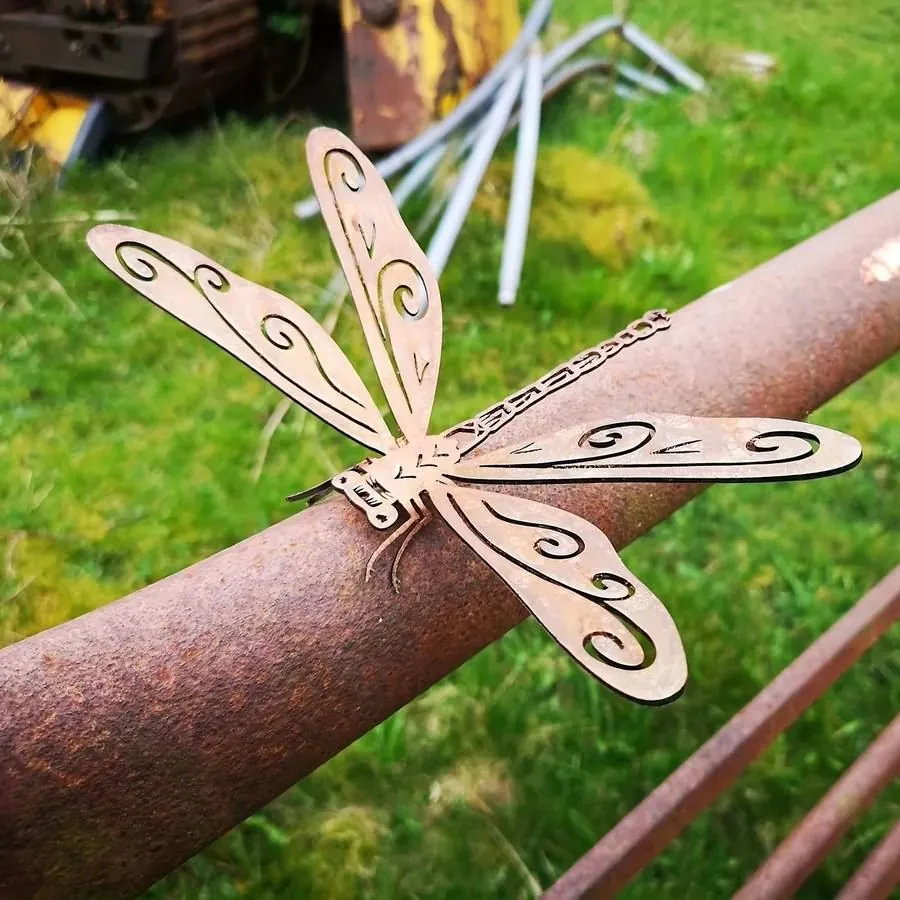
The best wall arrangements pair two things: something with weight and something with glow. A rustic metal dragonfly ornament brings line and shadow by day, its rusted finish reading as warmth rather than neglect. That rust is a decorative patina, not a fault, and it suits British brick and stone especially well. The rusted and metal range is full of pieces that cast lovely shadows in raking evening sun.
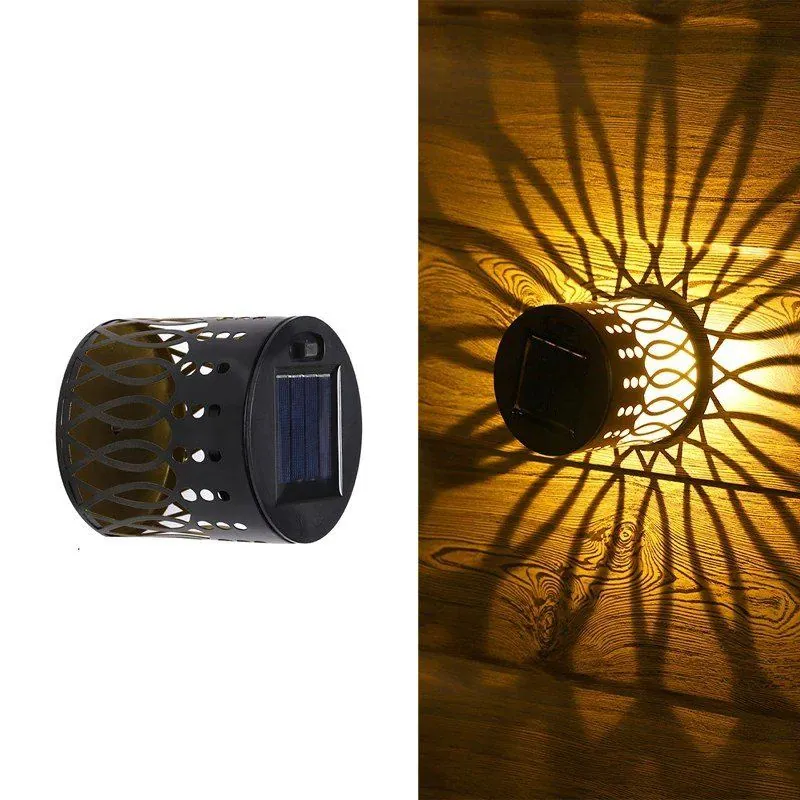
Then add light for the dark half of the year. A solar mandala fence light reads as an ornament by day and a soft pattern of light by dusk, no wiring needed. The wider solar collection has fence and wall pieces that carry a courtyard through the long evenings from autumn onwards.
Cluster small pieces in odd numbers
Where you want more than one piece, arrange in threes or fives rather than neat pairs, and vary the heights so the eye zigzags across the wall. A tight, considered cluster reads as deliberate; a scattering reads as an afterthought. Keep a little breathing room between them and let the wall itself show through, because the plain brick is what makes each shape legible.
Fix it properly, or lose it in the first storm
Now the unglamorous part that saves you heartache. A wall ornament is only as good as its fixing, and a piece that comes down in the first proper blow takes a chunk of your wall with it.
- Into masonry, drill and use a wall plug rated for the weight. Never rely on a nail in mortar.
- Into a fence, fix to the post or rail, not the thin panel, which flexes and splits.
- Check heavier metal pieces each spring, as our weather works fixings loose over time.
The Met Office has seasonal weather warnings worth a glance before autumn, because the gales that arrive with the clocks going back are exactly what test a badly hung ornament. Fix it right once and forget about it.
For the wider method on placement, backdrops and layering across the whole garden, our placement guide to styling garden ornaments takes it further.
Frequently Asked Questions
How do I hang garden ornaments on a fence? Fix into the sturdy fence post or rail rather than the thin panel, which flexes and can split. Use exterior-grade screws and check the weight rating of the ornament. For heavier metal pieces, masonry or a solid post is safer than any fence panel.
What are the best wall ornaments for a small garden? Lightweight metal or resin pieces work best, since they add height and interest without taking floor space. A single focal piece on your most-seen wall, paired with a solar light for the evenings, gives a small courtyard real character without crowding it.
Will rusted metal wall ornaments stain my wall? Decorative rusted metal can leave faint marks on very pale or porous surfaces over time. On brick, stone or fencing it rarely shows, and the aged finish is part of the look. If you are worried about a pale rendered wall, choose a powder-coated or resin piece instead.
About the author Eleanor Whitcombe - A garden should tell your story Eleanor trained in landscape design and spent twenty years creating gardens across the Cotswolds before turning to writing. She has always been drawn to the small personal touches clients smuggle in - a grandmother's birdbath, a wonky gnome nobody will bin. She's a firm believer that the ornament, not the lawn, is what makes a garden feel loved. Writing for Great British Garden Ornaments.