


Quick answer: Solar garden ornaments charge a small battery from a daylight panel and glow automatically at dusk, with no wiring and no running cost. They shine brightest from spring to autumn in the UK; in deep winter, short days and weak light mean dimmer, shorter glows. Give the panel full sun and they earn their place.
The first solar lantern I ever hung was a cheap little thing from a garden centre in Bristol, bought on a whim, half-expecting nothing. That evening it came on by itself, a soft amber wink against the fence, and I stood at the kitchen window far longer than a grown woman should. That is the pull of solar garden ornaments. No plug, no meter ticking, no trailing cable across the lawn. Just daylight going in and, come dusk, a little bit of magic coming back out.
I test these things now with a tester's stubbornness, clocking the lumens, timing the battery, moving the same lamp around the garden to see where it drinks the most sun. So this is the honest version. How they work, where to put them, what the numbers mean, and the bit most sellers skate over: how they behave through a proper British winter.
How Solar Garden Ornaments Actually Work
Strip away the pretty resin or the powder-coated steel and every one of these is the same simple loop. A photovoltaic panel turns daylight into electricity. That trickles into a small rechargeable battery through the day. When a light sensor notices dusk, it switches the LED on and drains the battery back out overnight. No mains, no standing charge, nothing to bill you for.
The clever part is that it is all automatic. You never flick a switch. As the Energy Saving Trust explains in its guidance on solar panels, photovoltaic cells generate power from daylight rather than direct heat, which is exactly why a bright but cold February afternoon still counts. Weak sun is still sun. It is just less of it.
Most garden ornaments use a tiny panel and a modest battery, so think mood rather than floodlight. They are there to charm a corner, not to light your washing line.
Do They Work in a UK Winter? The Honest Answer
Yes, but expect less. I will not pretend otherwise.
Solar ornaments live and die by daylight hours, and Britain is stingy with those in December. The Met Office records the shortest days around the winter solstice at roughly eight hours of daylight in southern England and closer to seven in Scotland, much of it flat and grey. Less light in means less light out. A lamp that glows for eight hours in July might manage three or four on a dank January night, and some very cheap ones barely stir at all.
There are three honest fixes. Buy a model with a separate panel you can angle south. Keep that panel spotless, because grime cuts charging more than people believe. And accept the season for what it is: my solar pieces are a summer-evening pleasure that dims through the darkest weeks, then wakes up around March. If you need reliable winter light on a path every night, mains or battery is the sturdier bet.
Placement: Chasing the Sun
Placement is the whole game, and it is where most disappointment starts. The panel wants the longest, strongest daylight you can give it, which in the UK means a south-facing spot clear of shadow from a shed, a wall, or that one greedy shrub.
- South-facing and open beats a pretty but shaded nook every time.
- Keep panels away from your house lights and street lamps, which can trick the dusk sensor into staying off.
- Wipe the panel every few weeks, more in autumn when leaves and drizzle leave a haze.
- Match the ornament to how much sun the spot really gets, not how much you wish it got.
For a shadier corner, choose ornaments where the panel sits on a stake you can plant in the sunniest patch nearby, like solar firefly stake lights, rather than a fixed piece stuck in the gloom.
Lumens, Batteries and IP Ratings, Demystified
Three numbers tell you what you are really buying. None of them are scary once you know the trick.
Lumens measure brightness. Garden ornaments are usually gentle, often 5 to 50 lumens, which is atmosphere, not security lighting. Battery capacity, in mAh, sets how long the glow lasts once charged; a bigger battery holds more evening. And the IP rating tells you how weatherproof it is. The first digit is dust, the second is water, so IP44 shrugs off rain while IP65 handles a hosing and a downpour without flinching. For anything living outdoors year-round in the UK, I would not drop below IP44.
Here is how the common ornament types stack up.
| Ornament type | Best spot | Charge need | Effect |
|---|---|---|---|
| Stake lights (fireflies, moons) | Borders, planted beds | Medium | Scattered points of light among foliage |
| Hanging ornaments | Fence, pergola, tree branch | Medium to high | Glow at eye level, gentle sway |
| Path and bollard lights | Along a route, driveway edge | High | Directional pool of light underfoot |
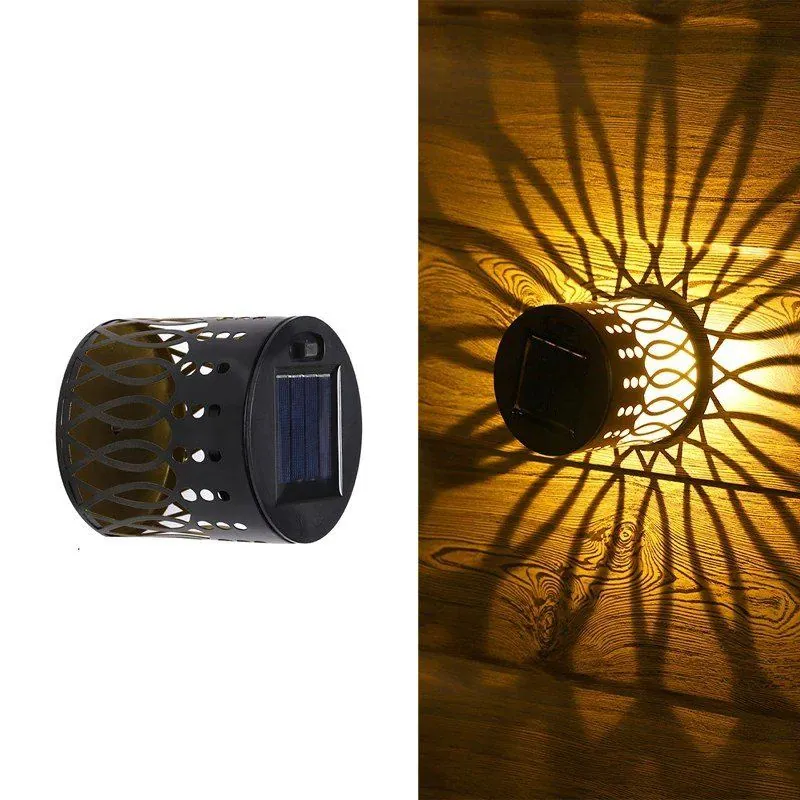
| Wall lights | Sunny courtyard wall, porch | High | Wash of light on brick or render |
| Decorative figures | Patio, rockery, feature corner | Low to medium | Soft accent, character after dark |
A stainless solar path light needs strong, consistent charging because it works hardest; a low-key solar mushroom garden lights cluster forgives a shadier morning. Buy for the effect you want, then place it where that effect can be fed.
Weather, Wear and Keeping the Glow
British weather is a stress test. Rain, frost, and that low autumn sun all take their toll, mostly on the battery and the panel rather than the ornament itself. Rechargeable cells fade over time and usually want replacing every year or two, which is a five-minute job on better-made pieces and impossible on the sealed cheap ones. Worth checking before you buy.
These are imported ornaments in resin, stainless steel or powder-coated metal, and build quality genuinely varies. A solid steel piece will outlast a thin resin novelty by years. For the full routine on cleaning panels, swapping batteries and putting delicate pieces away for winter, our sibling guide to caring for garden ornaments walks through it in detail. If you love a calm, considered look, the solar collection and the Japanese and Zen collection pair beautifully for a garden that softens as the light fades.
The Royal Horticultural Society champions gardens designed for evening enjoyment, and its garden design advice is a lovely nudge to think about how a space feels after sunset, not just at noon. That, for me, is the point of the whole thing. The garden's best hour is the one after the sun goes down, and solar ornaments hand it to you for free.
Frequently Asked Questions
Do solar garden ornaments work on cloudy days? Yes, though less strongly. Photovoltaic panels charge from daylight rather than direct heat, so an overcast day still tops up the battery, just more slowly. Expect a shorter, dimmer glow after a grey day than after a bright one.
How long do solar garden ornaments stay lit at night? Most give roughly six to eight hours after a full summer charge, dropping to three or four in winter when daylight is scarce. A larger battery and a clean, well-placed panel make the biggest difference to how long the glow lasts.
Can I leave solar ornaments outside all winter? Sturdy stainless or metal pieces rated IP44 or higher can stay out year-round. Delicate resin ornaments last longer if you bring them in during hard frosts, and swapping a tired battery each spring will bring a fading lamp back to full life.
About the author Grace Adeyemi - Light that brings a garden to life Grace is a Bristol software tester who fell for garden lighting after stringing up her first set of solar lanterns and never looked back. She now tests solar ornaments, lumens and battery life with an engineer's patience and a romantic's eye. For her, the garden's best hour is the one after sunset. Writing for Great British Garden Ornaments.