




Quick answer: To care for garden ornaments, clean them gently once or twice a year, keep them off wet ground, and protect the vulnerable ones before frost. Stone wants a soft brush and water, metal needs its coating kept sound, resin wipes clean, and wood needs oiling. Most damage comes from winter, so plan for it.
The care routine, in short
- Rinse once or twice a year with warm water and a soft brush - never a pressure washer.
- Keep every piece off wet ground - feet, gravel or a slab all do the job.
- Empty water features before the first hard frost, not after it.
- Touch up chipped coatings in autumn. Rust starts at the scratch, over winter.
- Feed timber yearly with an exterior oil. It is the one material that will not wait for you.
- Bring the delicate pieces in - glass and ceramic would rather overwinter in the shed.
I have spent forty years watching people love their garden ornaments to death, or rather, neglect them to death. A cracked cherub in March nearly always started as a small problem in November that nobody saw. Learning how to care for garden ornaments is not fussy work. It is a couple of afternoons a year and a bit of sense before the first hard frost. Do that, and a good piece lasts decades. Skip it, and stone spalls, metal weeps rust, and timber quietly goes to sponge.
This is the whole job, material by material. What to clean with, what to watch for, and which ornaments need bringing in before the cold bites.
Cleaning: Gentle Wins Every Time
The single most common mistake I see is a pressure washer aimed at old stone. Please do not. That blast strips lichen, opens the surface and drives water deep into the pores, which is exactly what you are trying to avoid. Stone and cast stone want a soft-bristle brush, plain water, and patience. Leave the lichen if you like it; that green age is half the charm of stone and sandstone ornaments.
Resin is the easy one. A damp cloth, a drop of mild soap, done. Metal depends on its finish: wipe powder-coated steel and dry it, and never scour it, because a scratch is where rust begins. Wood gets a brush-down and a check for soft spots. A soft touch beats a harsh one on every material there is.
Winter: Where Ornaments Go to Die
If you take one thing from this guide, take this. British winter is the enemy, and it works through water. Water gets into stone, freezes, expands and cracks it from the inside. The Met Office keeps clear records of just how many frost days different parts of the country get, and the North and the uplands cop far more than the soft south Met Office, UK climate averages. Know your local frost, and you know your risk.
Lift smaller ornaments off the wet ground onto pot feet or a slab so they are not sat in a puddle when it freezes. Empty and cover birdbaths and water features, because standing water freezing solid is what splits the bowl. Bring delicate resin and any painted pieces under cover if you can. Stone-effect resin copes better than porous stone with frost, but sun and cold still fade the cheaper paints over years.
Metal Upkeep: Guard the Coating
Metal lives or dies by its surface. On powder-coated or galvanised steel, the coating is the whole defence, so your job is keeping it whole. Check yearly for chips and scratches, especially at the base where mowers and strimmers do their damage. Touch up bare spots with a suitable metal paint before rust gets a hold and lifts the coating from underneath.
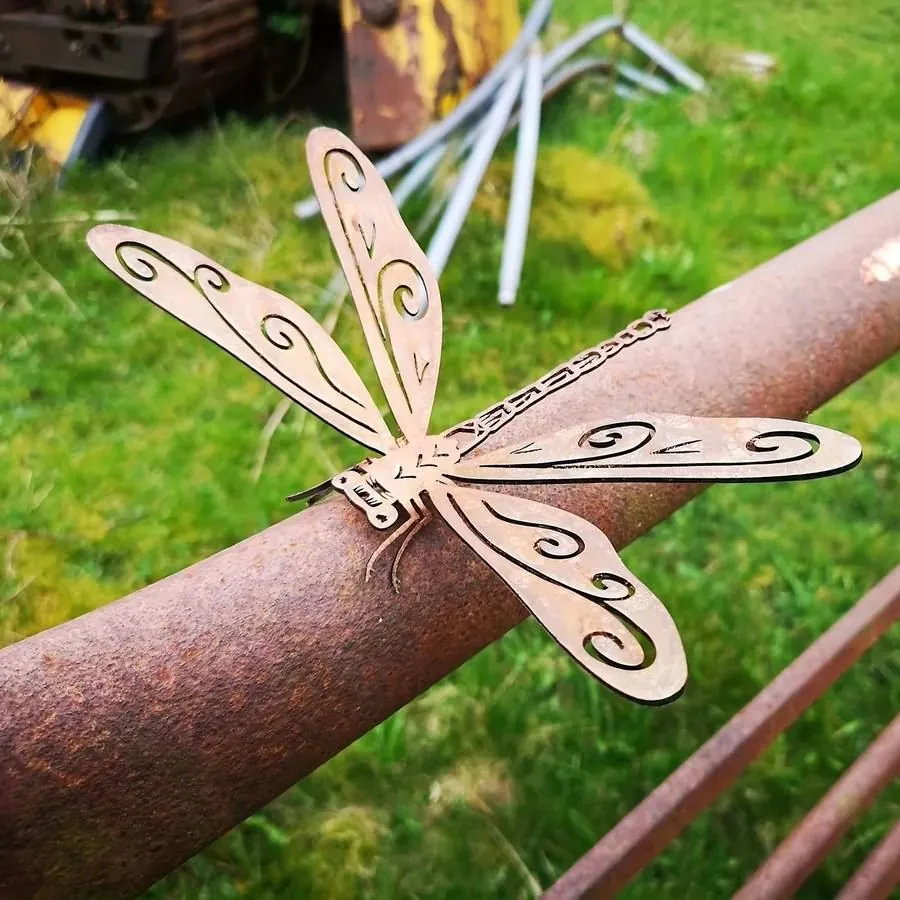
A shepherd's crook garden hook or any tall steel piece takes the most weather at the ground line, so that is where to look first. Rusted Corten-style metal is the exception; you want it to rust, so leave it be. The full rusty metal collection is built to weather, but even so, keep the feet out of permanent wet.
Wood: Feed It or Lose It
Timber is organic, so it is always trying to return to soil, and British damp is only too happy to help. The defence is oil and airflow. Give hardwood ornaments a coat of exterior oil once a year, more in an exposed spot, and make sure rain drains off rather than pooling on a flat top. Keep timber off wet ground and out of deep shade where it never dries.
Softwood pieces need more coddling than hardwood and still will not last as long, which is worth knowing before you buy. A good wooden ornaments range favours the tougher timbers for this reason. Look after wood and it repays you; ignore it and it is compost within a couple of wet seasons.
Care by Material at a Glance
Here is the shortcut, pinned to the four things that matter.
| Material | Cleaning method | Winter risk | Upkeep |
|---|---|---|---|
| Cast / natural stone | Soft brush and water, no pressure washer | High: frost cracks porous stone | Low, keep off wet ground |
| Powder-coated metal | Wipe and dry, no scouring | Low, but chips let rust in | Yearly coating check and touch-up |
| Rusted (Corten) metal | Leave the patina, brush off debris | Very low | Almost none, keep feet dry |
| Stone-effect resin | Damp cloth, mild soap | Low, colour fades slowly | Very low, wipe when grubby |
| Timber (hardwood) | Brush down, check for soft spots | High: damp and rot | Yearly oiling, keep dry |
Repairing Chips, Cracks and Breaks
Care is not only prevention. Most damaged ornaments are repairable, and the material decides the method.
- Cast stone, concrete and ceramic — two-part epoxy, on faces that are completely dry. Slow-set, not five-minute, so you have time to line a heavy piece up.
- Resin — a flexible exterior polyurethane adhesive, because resin moves with temperature in a way stone does not.
- Chips and missing corners — exterior repair mortar or epoxy filler, built up in thin layers. One thick blob shrinks as it cures and cracks at the edge.
- Never superglue outdoors. It is brittle, it will not fill a gap, and one winter of freeze and thaw pops the joint.
A crack that keeps reopening after a good repair is a water problem rather than an adhesive one: get the piece off wet ground and empty anything that holds rain. The full method, including when a piece is genuinely past saving, is in our guide to repairing cracked and broken garden ornaments.
The Honest Bottom Line
Good care is not much: a clean in spring, a coat of oil where wood needs it, and a walk round the garden before the first frost to lift, cover and empty. The RHS has broader seasonal advice worth a read if you want the wider garden jobs to line up with it RHS, garden advice. Get the materials right in the first place, which our guide to garden ornaments by material sets out plainly, and the upkeep gets easier still. Solar pieces have their own quirks around batteries and winter light, covered in the complete solar garden ornaments guide.
Frequently Asked Questions
How often should I clean garden ornaments? Once or twice a year is plenty for most. A spring clean after winter and a light going-over in autumn keeps stone, resin and metal in good order. Wood benefits from a check more often, since soft spots are easier to treat early.
Can I leave garden ornaments out in winter? Frost-hardy stone, rusted metal and quality resin generally cope, provided they are off wet ground and any water is emptied out. Delicate, painted or porous pieces are safer under cover. The real killer is water sitting in or on an ornament and freezing solid.
What is the best way to clean a stone ornament? A soft-bristle brush, plain water and time. Skip the pressure washer, which drives water into the stone and strips the lichen that protects and flatters it. For stubborn grime, a mild soap solution and gentle scrubbing is as harsh as you should ever go.
Can a broken garden ornament be repaired? Usually, yes. A clean break bonds well with two-part epoxy on stone or ceramic, or a flexible polyurethane adhesive on resin, provided both faces are bone dry first. It is worth stopping at pieces shattered into several fragments, breaks across a load-bearing point such as an ankle or a birdbath stem, and concrete that has gone crumbly throughout.
Should I seal a garden ornament? Only if it is thoroughly dry first. Sealing a damp piece traps moisture inside, and trapped moisture is exactly what causes frost damage. Use a breathable masonry product in settled weather, and accept it will need redoing. For most ornaments, good placement - off the ground, out of standing water, somewhere air moves - does more than any sealant.
About the author Bill Tunnicliffe - Knows his stone from his resin Bill spent forty years working stone across Derbyshire, from church repairs to garden commissions, and knows exactly how cast stone, resin and lead weather over decades. He's restored more frost-cracked cherubs than he can count. He'll tell you straight which materials survive a British winter and which turn to crumbs. Writing for Great British Garden Ornaments.