

Quick answer: Weathering steel forms a tight rust layer that then protects the metal underneath, so the finish is the point rather than a fault. It runs orange for the first year or two and will stain paving beneath it, so stand it on gravel or soil until the colour settles.
I spent forty years working stone, and the thing I get asked most about metal is whether the rusty ones are broken. They are not. That finish is deliberate, and it is doing a job.
What weathering steel actually is
Most of the rusted pieces people buy are weathering steel rather than plain steel, and the difference matters. Ordinary steel rusts, the rust flakes off, fresh metal is exposed underneath, and the process repeats until there is nothing left. That is what most people picture when they hear rust.
Weathering steel - often called corten, after an early trade name - is alloyed so the rust behaves differently. The first layer forms tightly and stays put, and that stable layer then slows the corrosion beneath it. The metal reaches a point where it is essentially protecting itself.
So a rusted ornament is not deteriorating. It has finished doing the thing it was supposed to do.
How it changes
Not instantly, and not evenly.
A new piece usually arrives bright or lightly oxidised. Over the first months it goes bright orange, then over a year or two it deepens to a darker brown-red. The rate depends on how wet and how exposed the spot is - wet-then-dry cycles drive it, so a sheltered piece under an overhang takes far longer than one out in the open.
Different faces will colour at different speeds. That unevenness settles down.
The staining problem, which is real
This is the part worth knowing before you buy rather than after.
While the rust layer is forming, rain carries loose particles off the piece and deposits them on whatever is underneath. On pale paving, decking or a patio, that leaves an orange stain that is genuinely hard to remove.
Two ways round it. Stand the piece on soil, bark or gravel, where run-off does not matter. Or keep it off paving for its first year or two, then move it once the surface has stabilised and stops shedding.
If it must go on a patio from day one, put a hidden tray or a bed of gravel under it.
Telling weathering steel from steel that is just rusting
Worth checking, because the two look similar in a photograph.
- Rub it firmly. Settled weathering steel gives a fine dust and a tight surface. Ordinary rusting steel flakes, and the flakes come away in sheets.
- Look at the edges and welds. Pitting, holes or a thin crumbling edge is corrosion, not patina.
- Check the description. "Rust-effect finish" usually means paint on ordinary steel, which is fine but behaves completely differently - it will chip rather than deepen.
The metal ornaments guide covers steel, iron and bronze-effect finishes side by side.
Where it looks best
Rusted metal is warm, matt and completely non-reflective, which makes it unusually easy to place.
It sits beautifully against green - grasses, evergreens, a hedge - and against grey stone and slate. It works in both contemporary and cottage gardens, which not many finishes manage.
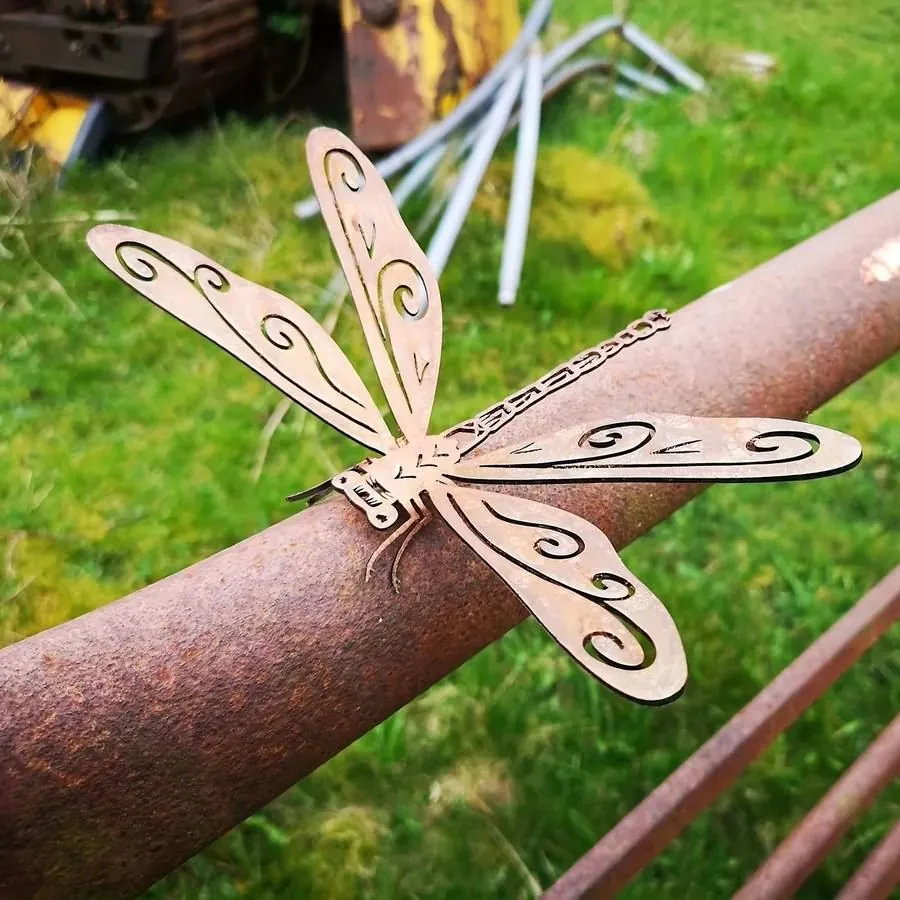
Where it struggles is against red brick, where the tones fight, and against very busy planting, where the silhouette is lost. Slim cut-out shapes need a plain background more than solid ones do.
Have a look at the metal and rusty range and vintage and rustic pieces.
Care, which is mostly leaving it alone
Do not paint it, seal it or wire-brush it back to bright metal. All three interrupt the layer that is protecting the steel.
If you want to slow the colour down, keep it somewhere sheltered. If you want to speed it up, wet it repeatedly and let it dry.
The one thing to watch is standing water. A piece sitting in a puddle, or with a hollow that traps water, will corrode faster at that point than anywhere else. Raise it slightly and let water run off. The care guide covers the rest.
Practical points
Metal pieces are often slim and tall, which gives you height without bulk — useful in a small garden, as the placement guide covers. But slim also means light, and light means wind. Stake or weight anything with a large flat face.
And keep sharp cut edges away from paths where children run past. The unusual ornaments guide has more on cut-out designs.
What it costs you, honestly
Weathering steel is not the cheapest finish, and it is worth knowing what the money buys.
It buys longevity without maintenance. There is no coating to chip, no paint to fade, nothing to reapply every couple of years. Once the surface has stabilised it looks after itself, which very few outdoor materials do.
What it does not buy is instant results. A new piece looks raw, and the colour people fall for takes a year or two to arrive. If you want the deep brown-red immediately, buy something already weathered rather than something new.
And it is genuinely a one-way finish. There is no going back to bright steel without stripping it, so it suits people who like the look rather than people who are curious about it.
Browse metal and rusty ornaments, statues and sculptures and wall and hanging pieces, with more in the materials guide.
The short version
- Weathering steel forms a tight rust layer that then protects the metal beneath it.
- Expect bright orange for the first year, deepening to brown-red over one to two years.
- Run-off stains pale paving badly, so keep it on gravel or soil while it settles.
- Flaking sheets and pitted edges mean ordinary corrosion, not patina.
- Never paint, seal or wire-brush it, and never let it stand in a puddle.
Frequently asked questions
Are rusty garden ornaments meant to look like that?
Yes. Weathering steel is alloyed so the first rust layer forms tightly and stays put, and that layer then slows corrosion underneath. A rusted piece is not deteriorating - it has finished doing what it was designed to do.
How long does corten steel take to rust?
It usually goes bright orange within the first few months and deepens to a darker brown-red over one to two years. Wet-then-dry cycles drive it, so an exposed piece colours far faster than one under an overhang.
Will a rusty ornament stain my patio?
While the surface is still settling, yes, and the orange staining is hard to remove from pale paving or decking. Stand it on gravel, bark or soil for the first year or two, or set it on a hidden tray if it must go on a patio.
How do I tell weathering steel from ordinary rust?
Rub it firmly. Settled weathering steel gives fine dust and a tight surface, while ordinary rusting steel flakes away in sheets. Pitting, holes or thin crumbling edges mean corrosion rather than patina.
Should I seal or paint a rusted ornament?
No. Painting, sealing or wire-brushing all interrupt the stable layer that protects the steel underneath. The only thing worth avoiding is standing water, so raise the piece slightly and make sure nothing traps a puddle.