
Quick answer: Metal garden ornaments in the UK come mostly in steel, iron and bronze-look finishes. Steel is the everyday workhorse, powder-coated or left to rust to a warm orange crust, iron is heavier and older in feel, and bronze-effect pieces bring a classic sheen. All last for years outdoors if you keep the finish sound and the feet dry.
Choosing between the metals
- Powder-coated steel - lightest and easiest to move. Guard the coating and it will keep looking new.
- Rusted (Corten) steel - the rust is the finish, not a fault. It darkens, stabilises and then stops.
- Iron - heaviest and most traditional in feel. Give it a dry base and touch up any chips.
- Bronze and brass effects - a warm sheen that dulls to a patina. Leave it or polish it; both are legitimate.
- Anything coated - deal with scratches before winter. That is where rust starts.
- On soft ground - stand metal on a slab or gravel so the base is not sitting in water all winter.
I came to metal late, if I am honest. After a lifetime with stone I thought of it as the flashy cousin. Then I watched a rusted steel heron catch the low light on a drizzly November afternoon in a garden near Bakewell, and I changed my tune. Metal ornaments garden makers turn out these days have a life and movement stone never manages. This is the plain guide to what you are actually buying when you pick metal, and how to make it last.
Steel: The Everyday Workhorse
Most metal garden ornaments you will meet are steel, and steel comes two ways. Powder-coated or galvanised steel is treated to fight rust, so it stays whatever colour it left the factory. Corten-style steel does the opposite: it rusts on purpose, forming a stable orange crust that then largely stops corroding and looks warm and settled among planting.
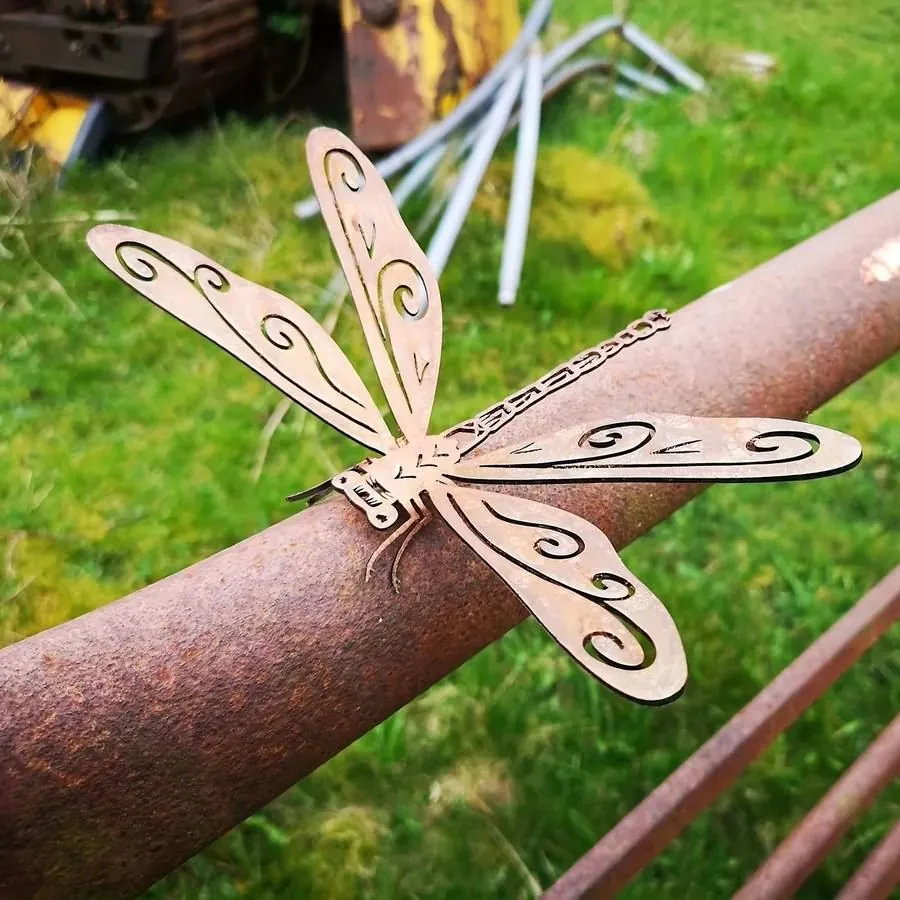
I rate both, for different gardens. Coated steel suits a crisp, modern border; rusted steel suits a wilder, cottage look. A rustic metal dragonfly ornament on a stake is a fine way to bring a bit of shimmer and movement in low, and the wider rusty metal collection runs from silhouettes to full sculptures.
Iron: Heavy, Handsome, Old-School
Cast and wrought iron carry weight, literally and in feel. An iron piece has heft and an antique presence that lighter metals cannot copy, which is why it suits formal gardens and period houses. The trade-off is exactly that weight, plus a real appetite for rust if the protective finish fails.
Keep iron painted or waxed and out of standing water, and it lasts generations, as any old Victorian park railing proves. Let the finish go and it weeps rust stains down whatever it stands on. Worth knowing before you site a heavy piece on pale paving.
Bronze and Brass: The Warm Sheen
True bronze is costly and mostly the preserve of gallery sculpture, so what you will usually find in the garden trade is a bronze-effect finish or genuine brass. Brass weathers to a soft, dignified patina and rings beautifully, which is why it shows up in wind chimes so often. A brass bell wind chime adds sound as well as sight, and sound is a dimension stone and steel simply do not have.
Hang chimes and lighter metal pieces on garden wall-hanging fixings where they catch a breeze but stay clear of constant wet. The RHS notes that sound and movement are as much a part of good garden design as planting, and a well-placed chime proves the point RHS, garden design advice.
How the Metals Compare
A quick honest read on the three you will actually choose between.
| Metal | Feel | Rust behaviour | Best for |
|---|---|---|---|
| Steel (coated) | Light, crisp | Resists rust until coating chips | Modern borders, stakes, silhouettes |
| Steel (Corten-style) | Light, warm | Rusts to a stable crust then holds | Cottage and wild planting |
| Iron | Heavy, antique | Rusts fast if finish fails | Formal gardens, period settings |
| Bronze / brass effect | Warm, refined | Patinas gently, does not rot | Chimes, accents, classic looks |
Keeping Metal Right
The rule across all metal is the same: guard the surface and keep the base out of permanent wet. Check coated steel and iron yearly for chips, especially at the ground line where strimmers do damage, and touch up bare spots before rust takes hold. Leave rusted Corten metal well alone, since the rust is the finish. For the full weathering picture across every material, our guide to garden ornaments by material lays it out side by side. Metal earns its place in a British garden, drizzle and all, so long as you give the finish a bit of respect.
Frequently Asked Questions
Do metal garden ornaments rust outdoors in the UK? Coated and galvanised steel resist rust until the coating is chipped or scratched, when rust can creep underneath. Corten-style steel rusts deliberately to a stable orange crust and then largely stops. Iron rusts quickly if its paint or wax finish fails, so keep it protected.
Which metal lasts longest in the garden? Well-maintained iron and coated steel both last for generations, as old railings and gates show. The deciding factor is not the metal but the finish: keep the coating sound and the base out of standing water, and any good garden metal will see out decades.
Are rusted metal ornaments a sign of poor quality? Not with Corten-style steel, where rusting is intentional and forms a protective, good-looking crust. On coated steel or iron, however, rust breaking through does mean the finish has failed and needs touching up before it spreads and stains.
About the author Bill Tunnicliffe - Knows his stone from his resin Bill spent forty years working stone across Derbyshire, from church repairs to garden commissions, and knows exactly how cast stone, resin and lead weather over decades. He's restored more frost-cracked cherubs than he can count. He'll tell you straight which materials survive a British winter and which turn to crumbs. Writing for Great British Garden Ornaments.