
Quick answer: The number is not the problem - the relationship between the pieces is. If you can see more than one thing asking for attention in a single view, it is too many in that view. Group them, repeat a material, and leave empty space, and a large collection reads as deliberate.
There is no correct number of garden ornaments. There is a correct arrangement, and that is a much more useful thing to know.
The test
Stand where you usually look at the garden from. Count the things asking for attention in that one view.
If it is one, the garden is composed. If it is two or three of similar weight, the eye bounces between them and settles on none. That is the actual failure - not the total number in the garden, but the number competing in a single sightline.
A garden with thirty ornaments can look considered if they are grouped and separated by views. A garden with four can look cluttered if all four are visible at once and none is dominant.
Clutter is a relationship problem
What reads as clutter is almost never quantity. It is pieces that have nothing to do with each other.
Five ornaments in five materials, five colours and five styles, spread evenly across a lawn, will look untidy however good each one is. Fifteen pieces that share a material and sit in three deliberate groups will not.
So the question is not "how many should I get rid of". It is "what do these have in common, and where are they".
Fix one: group them
The highest-value change, and it costs nothing.
Scattered pieces read as accumulation. Grouped pieces read as arrangement. Move things into clusters of three or five at varied heights, and leave whole stretches of the garden with nothing in them.
The empty stretches are doing real work. Without them there is nothing for the groups to be distinct from - the same reason a focal point needs a plain background.
Fix two: repeat something
Give the collection a thread. Any one of these is enough:
- A material - all metal, all stone-effect, all wood.
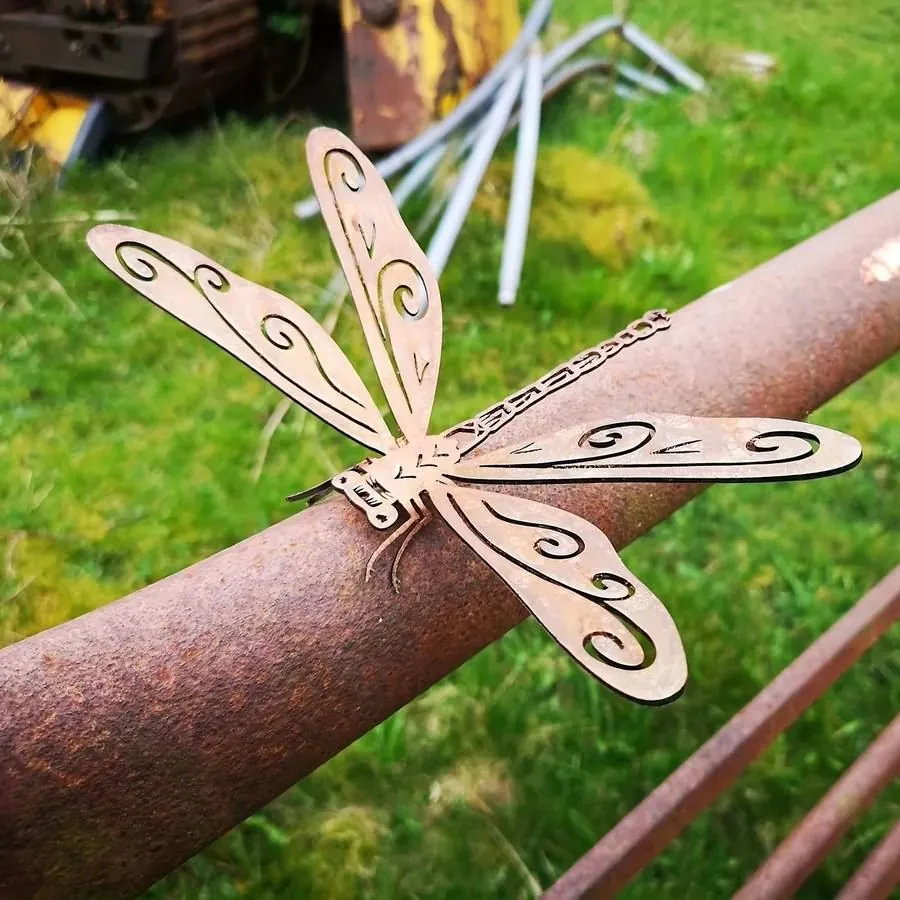
- A colour - all pale, all dark, all rusted.
- A subject - all birds, all abstract forms.
- A finish - all matt, all aged.
Repetition is what turns objects into a collection. It is the same principle as keeping one style dominant, applied across a whole garden.
Fix three: use the whole garden
Separate groups so they cannot be seen at once.
Behind a hedge, round a corner, down the side of the house, in the front garden rather than the back. That way each group gets its own moment instead of competing.
It also makes a garden feel bigger, because a space you have to walk through to see all of reads as larger than one you take in from the door.
Vary the scale
A common cause of a cluttered look is that everything is roughly the same size.
Six medium ornaments create six equal claims on attention. One large piece with several small ones has a clear hierarchy - the large one leads and the small ones support, so the eye knows where to go first.
The large ornaments guide and the small ornaments guide cover both ends.
When it genuinely is too many
A few honest signals, none of which are about the count:
You cannot see the planting. Ornaments should punctuate a garden rather than be it - unless a collection is deliberately the point, which is a legitimate choice made on purpose.
Mowing and weeding have become an obstacle course. Practical friction is a real cost.
You have stopped noticing individual pieces. When everything is background, nothing is doing its job.
Thinning without losing anything
You do not have to part with things.
Rotate seasonally. Keep more out in winter, when the garden is bare and needs the interest, and put some away in summer when planting fills the space. Bringing painted pieces in over winter also slows fading, which the fading guide covers.
Move some to the front garden, a porch, a shed shelf or indoors. Concentrate the rest into one really good area - a corner that is unapologetically full - and leave the remainder of the garden clear.
And the honest caveat
All of this assumes you want the garden to look composed. Plenty of people want a garden stuffed with things that make them happy, and that is a completely valid aim.
If your ornaments are the point rather than the decoration, ignore most of the above and enjoy them. Just do it on purpose. The gnome guide makes the same argument at greater length.
Browse statues and sculptures, unusual pieces and metal ornaments, with more in the placement guide.
The short version
- Count what competes in one view, not what exists in the garden.
- Clutter is pieces having nothing in common, not pieces being numerous.
- Group into clusters of three or five and leave whole stretches empty.
- Repeat a material, colour, subject or finish to turn objects into a collection.
- Vary scale so one piece leads - six equal-sized ornaments make six equal claims.
Frequently asked questions
How many garden ornaments are too many?
There is no correct number. What matters is how many compete for attention in one view: one is composed, while two or three of similar weight make the eye bounce between them. Thirty can look considered if they are grouped.
Why does my garden look cluttered?
Usually because the pieces have nothing in common rather than because there are too many. Five ornaments in five materials and styles spread across a lawn look untidy, while fifteen sharing a material in three groups do not.
How do I make a large ornament collection look deliberate?
Group them into clusters of three or five at varied heights, leave whole stretches of the garden empty, and repeat one material, colour or subject across the collection so there is a visible thread running through it.
Should I get rid of some ornaments?
Rarely necessary. Rotate them seasonally, keeping more out in winter when the garden is bare, move some to the front garden or a porch, and concentrate the rest into one deliberately full area with the remainder left clear.
Is it wrong to have lots of ornaments?
Not at all, provided it is on purpose. If the collection is the point rather than the decoration, most composition advice does not apply. The problem is only when a garden ends up crowded by accumulation rather than by choice.