

Quick answer: Garden gnomes came to Britain from Germany in the mid-1800s and have swung between fashionable and mocked ever since. They look best used sparingly and placed where they seem to be doing something, rather than lined up facing the house.
My garden has over forty gnomes in it, so I am aware I am not an impartial witness. But the history is genuinely more interesting than the reputation.
Where they came from
Garden gnomes came to Britain from Germany in the mid-nineteenth century, where small ceramic figures of miners and folkloric dwarves were already being made.
They arrived as an expensive, fashionable import for large country gardens - the opposite of their later reputation. Being able to display a set of imported ceramic figures was, briefly, a mark of status.
Mass production in the twentieth century is what changed their standing. Once anyone could have one, having one stopped signifying anything, and the cultural snobbery followed almost immediately.
The Chelsea ban
The detail everyone enjoys: the RHS Chelsea Flower Show long prohibited gnomes and similar "brightly coloured mythical creatures" from show gardens.
The ban was relaxed for the show's centenary year, when designers were invited to decorate gnomes for charity, and the rules have since eased further.
It is a small thing, but it captures the whole story: the gnome as the dividing line between gardening as design and gardening as pleasure. Which is a false division, and one worth ignoring.
Why they still work
Because a garden that takes itself entirely seriously is quite hard to enjoy.
A gnome is a small piece of evidence that someone lives here and finds things funny. It does the same job as an ugly mug you refuse to throw out. Gardens that are perfectly composed and completely humourless are impressive rather than likeable.
There is also the straightforward point that children love them, and a garden a child wants to walk into is worth more than one that photographs well.
Styling: give them something to do
The single biggest improvement you can make.
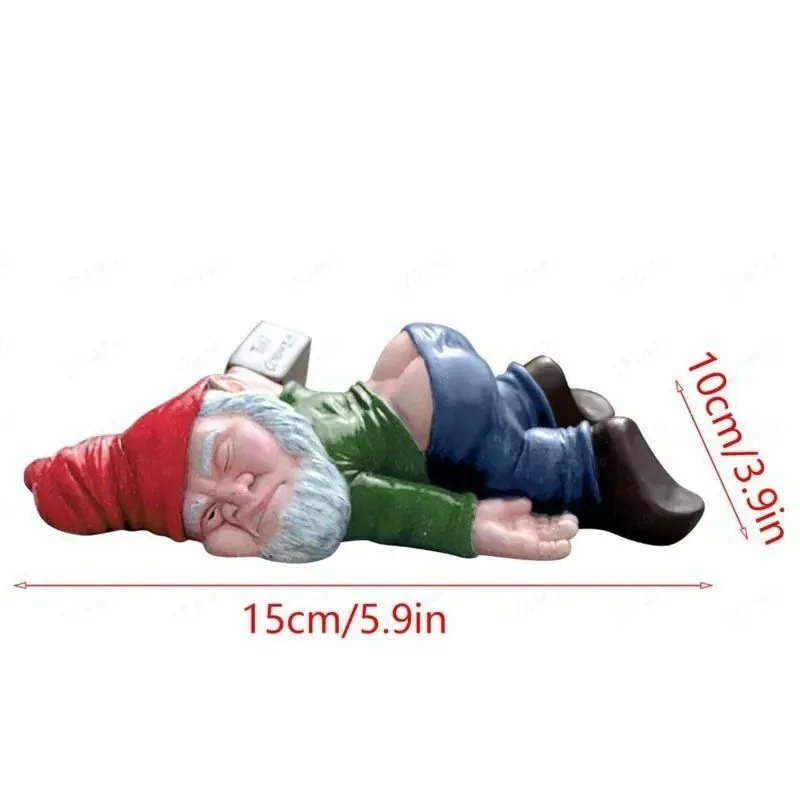
A gnome standing to attention facing the house is an ornament. A gnome apparently fishing at the edge of a pond, leaning on a wall, asleep under a shrub or peering round a pot is a small joke that rewards noticing.
So place them mid-action and in context. Facing away from the viewer often works better than facing towards.
Half-hidden beats fully visible. The best-received gnome in my garden is behind a fern and most visitors find it on their second walk round.
How many
Here is the honest advice, from someone who ignored it.
One or two, well placed, reads as wit. A dozen reads as a collection, which is a completely different statement and one you should make deliberately rather than by accumulation.
If you do want a lot, concentrate them in one area and leave the rest of the garden alone. A gnome village in a corner is charming. Gnomes distributed evenly through every border is something else.
The toadstool guide makes the same point about concentrating rather than spreading.
What to put with them
Gnomes sit in a family of pieces that support each other - toadstools, fairy doors, small animals, tiny scenes. The fairy garden guide covers building a whole setting.
What they do not sit well with is anything strictly formal. A gnome beside a clipped topiary sphere reads as a mistake rather than a joke, because there is no shared register.
Rough, informal, cottagey planting is their natural home. See the gnomes and characters range and toadstools.
Keeping them looking well
Most modern gnomes are cast resin, so they cope with frost and wet perfectly well. What fades is the paint, and gnomes are more paint-dependent than almost any other ornament - a faded gnome looks sad in a way a faded sphere does not.
Shade is the main defence, and a clear UV sealant helps considerably. The resin guide covers the material, and the care guide covers touching them up.
Older ceramic gnomes are a different matter and genuinely at risk from frost - those want bringing in for winter.
The point of them
Gnomes are the clearest example of a garden being for the person who uses it rather than for anyone judging it. If one makes you grin on the way to the bins, it is doing everything required of it.
Theft, oddly
Gnomes go missing more than any other ornament, sometimes as a prank and sometimes not.
If a piece matters to you, keep it away from the front boundary and out of easy reach from a gate. Anything visible from the pavement is the most likely to walk.
Pegging a gnome down, or standing it on a spike bedded into the soil, deters the casual version entirely, and it also stops it being knocked over by wind and animals.
Browse gnomes and characters, funny and novelty pieces and fairy garden ornaments, with more in the characters guide.
The short version
- Gnomes arrived from Germany in the mid-1800s as an expensive status import.
- Chelsea long banned them, then relaxed the rule for the show's centenary year.
- Place them mid-action and in context - fishing, leaning, asleep - not facing the house.
- Half-hidden beats fully visible; the best ones are found on a second walk round.
- They are more paint-dependent than most ornaments, so shade and a UV sealant matter.
Frequently asked questions
Where did garden gnomes come from?
They came to Britain from Germany in the mid-nineteenth century, where small ceramic figures of miners and folkloric dwarves were already made. They arrived as an expensive fashionable import for large country gardens.
Were gnomes really banned from Chelsea?
Yes. The RHS Chelsea Flower Show long prohibited gnomes and similar brightly coloured mythical creatures from show gardens. The rule was relaxed for the show's centenary year, when designers decorated gnomes for charity.
How should I place a garden gnome?
Give it something to be doing. A gnome apparently fishing at a pond edge, leaning on a wall or asleep under a shrub is a small joke, while one standing to attention facing the house is just an ornament.
How many gnomes is too many?
One or two well placed reads as wit, and a dozen reads as a collection, which is a different statement worth making deliberately. If you want a lot, concentrate them in one area rather than spreading them through every border.
Do garden gnomes survive winter?
Modern resin ones cope with frost and wet perfectly well, though the paint fades in sun and gnomes depend on paint more than most ornaments. Older ceramic gnomes are genuinely at risk from frost and are better brought in.