

Quick answer: Put it where the eye already travels: at the end of the longest diagonal, in a corner you cannot use, against a plain wall, or somewhere it appears only as you turn. Avoid the exact centre and avoid the middle of the lawn, which shrinks a small garden rather than filling it.
Small gardens are where placement stops being decoration and starts being design. There is no room for a mistake to hide.
Find the longest line
The single most useful trick in a small garden.
Whatever the shape, there is one line across it that is longer than any other - usually a diagonal from one corner to the opposite one. Put the statue at the far end of that line and the garden reads longer than it is, because the eye travels the full distance to reach it.
Put the same piece halfway along, or square in the middle, and you have cut the space in two. It is the same object doing the opposite job.
The four spots that work
The end of the diagonal. As above. This is the default, and it is right more often than anything else.
A corner you cannot use anyway. Every small garden has one - too shaded for planting, too awkward for a chair. A statue turns dead space into something deliberate, and costs you nothing you were using.
Against a plain wall or fence. Small gardens are mostly boundary, and a bare panel is the best backdrop you will get. It also gives the piece somewhere to stand without eating floor.
Just out of sight round a turn. If the garden has any bend or divide at all, putting something where it appears only once you have moved makes a small space feel like it has more than one part to it.
The spot that never works
The middle of the lawn.
It looks logical - the piece is visible from everywhere. In practice it stops the garden being one space, blocks the only usable open area, and makes the whole thing feel smaller. It is also the first thing anyone mows around and resents.
Keep the open middle open. Put things at the edges and at the ends.
Scale down, but not too far
Small gardens do not need tiny ornaments. That is a common misreading.
A single piece of reasonable size reads as confident. Half a dozen small ones read as clutter, and clutter is what actually makes a small garden feel smaller. If you are choosing between one 50cm piece and four 15cm ones, take the one.
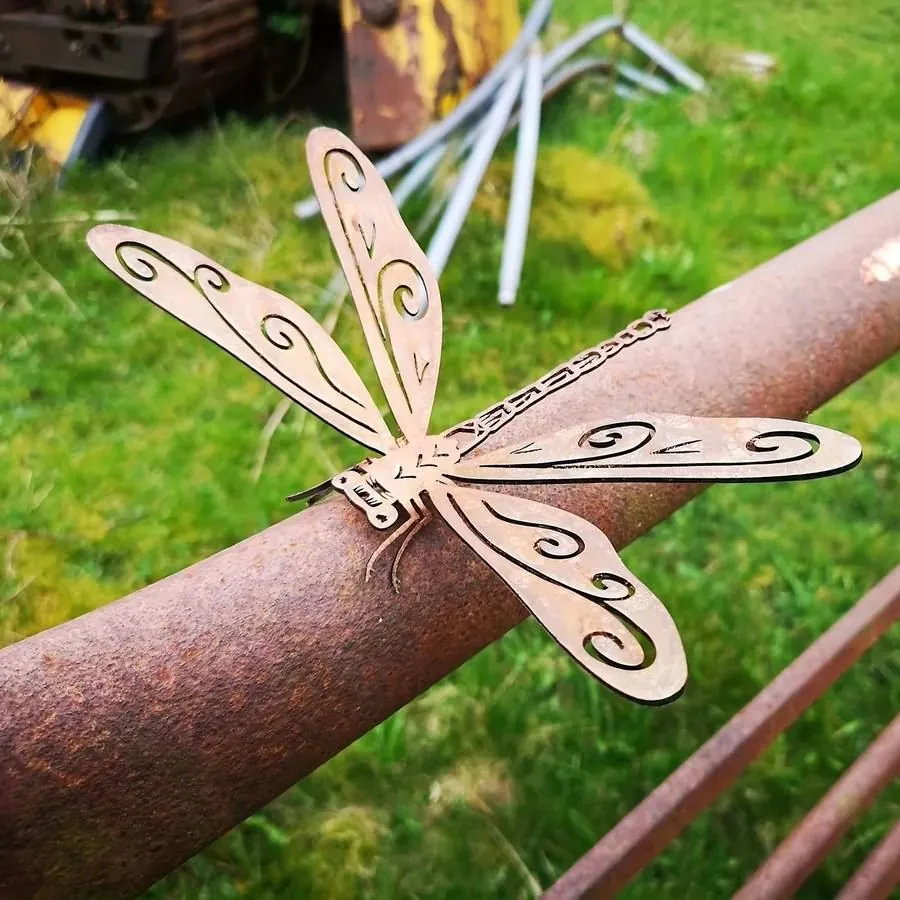
What does need care is bulk. A slim, tall shape takes up far less visual room than a wide one of the same height - which is why metal pieces suit small gardens so well. The metal guide covers the shapes available.
Use height, because you have no width
Ground space is the thing you are short of. Vertical space is free.
Wall-mounted pieces, hanging ornaments and anything on a fence give you presence without a footprint - the wall and hanging guide and the hanging ornaments guide both cover this, and the wall and hanging range is where to look.
Raising a small piece on a plinth does the same job: it moves the ornament into your eyeline without taking another inch of ground.
Lighting doubles the value
A small garden is often looked at more in the evening than in the day, particularly from indoors in winter.
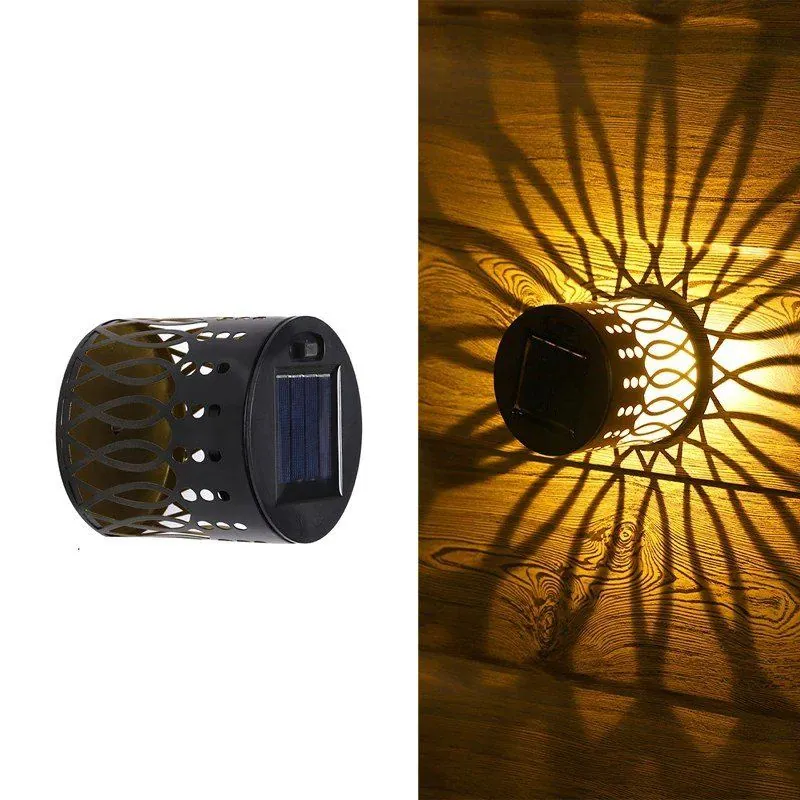
A light near a statue means it is still doing something at seven in the evening in November, which is when a small garden most needs help. A solar light nearby costs nothing to run and needs no cable trench - the solar guide covers what to expect from one.
Test before you commit
Put a cardboard box roughly the right size where you think it goes. Leave it a day. Look at it from the kitchen window, from the door, from where you sit.
It is a slightly silly thing to do and it saves people from a piece they can only see properly from a spot they never stand in.
Watch what happens in winter
Small gardens change more between seasons than large ones, proportionally, because there is less permanent structure holding them together.
In July a statue can be half-hidden by planting and still look intentional. In January, with the borders cut back, the same piece is suddenly the only thing there - and if it was chosen to peep out of foliage, it now looks stranded on bare soil.
Two ways to handle it. Either choose the position for how it reads in winter and accept that summer partly covers it, which is usually the better call. Or put something evergreen behind it, so the backdrop is there all year and the piece never ends up floating.
Evergreen structure is worth more in a small garden than in a big one, for exactly this reason.
Browse statues and sculptures and unusual pieces, with more in the placement guide and the complete guide.
The short version
- Place it at the far end of the garden's longest diagonal to make the space read longer.
- Corners you cannot use anyway are the cheapest good spot in a small garden.
- Never the middle of the lawn - it halves the space and blocks the only open area.
- One piece of decent size beats several small ones; clutter is what shrinks a garden.
- Use walls, fences and plinths, because vertical space costs you no ground.
Frequently asked questions
Where is the best place for a statue in a small garden?
At the far end of the longest line across the garden, usually a corner-to-corner diagonal. The eye travels the full distance to reach it, which makes the space read longer than it actually is.
Should a statue go in the middle of a small garden?
No. Centring a piece looks logical but stops the garden being one space, blocks the only usable open area and makes the whole thing feel smaller. Keep the middle open and place things at the edges and ends.
Do small gardens need small ornaments?
Not really. One piece of reasonable size reads as confident, while several small ones read as clutter, and clutter is what actually makes a small garden feel smaller. Watch bulk rather than height - slim shapes take less visual room.
How can I add ornaments without losing space?
Go vertical. Wall-mounted and hanging pieces give you presence with no footprint at all, and raising a small ornament on a plinth lifts it into your eyeline without taking another inch of ground.
How do I know a spot will work before buying?
Put a cardboard box of roughly the right size where you think the piece goes and leave it a day. Look at it from the kitchen window, the back door and wherever you sit. It stops you buying something you cannot see.