



Quick answer: Find where your eye already stops when you look out from the house, then put the piece there. A focal point holds attention through contrast, so give it a plain background and enough scale, and make sure nothing else in the same view is competing for the same job.
Every garden has a focal point whether you chose it or not. Usually it is the shed, or the neighbour's extension. The job is to give the eye somewhere better to land.
Find where the eye already goes
Stand where you actually look at the garden from - the back door, the kitchen sink, your usual chair. Look out and notice where your eye stops without being told to.
That is your focal point, and it already exists. You are choosing what occupies it, not inventing it.
Do this from two or three positions. If they all land in roughly the same place, that is the spot. If they land somewhere different, choose the view you use most - usually the one from indoors, because that is where you see the garden from for most of the year.
What makes something hold attention
Contrast, in one of four ways. A focal point needs at least one, and it does not need all four.
Contrast of colour. Something pale against dark planting, or warm against green.
Contrast of form. A hard geometric shape among soft planting, or a rounded one among uprights.
Contrast of texture. Smooth against rough, matt against glossy.
Contrast of scale. Something distinctly bigger than everything near it - the approach in the large ornaments guide.
Something that matches its surroundings in all four will be invisible, however handsome it is.
Give it a background
The most common reason a statement piece fails.
A plain, ideally dark backdrop is what makes an outline read. A clipped hedge, a fence panel, a wall, a mass of a single plant. Put the same piece in front of a mixed border and by July the shape has dissolved into leaves.
Evergreen backdrops earn their keep because they hold the piece in winter too, which is when a garden most needs something to look at.
One per view
This is the rule people break most often, usually by buying a second thing they liked.
Two focal points in the same view do not give you twice the interest. They compete, and the eye bounces between them without settling on either. The result reads as busy rather than composed.
If you want more than one, separate them - round a corner, behind a hedge, down a different path - so they are never seen at the same time. That also gives a garden a sense of having more than one room, which is worth more than the second ornament is.
The small garden guide covers this where space is tight, and the placement guide covers the wider principles.
Give it a setting
A focal point looks accidental when it is simply standing somewhere.
Small moves that fix it: a plain surface underneath, a low planting collar around the base, a change of level, a path that leads towards it, or a gap in planting that frames it.
Framing is the strongest of these. An arch, a gap between two shrubs, or a window in a hedge turns a piece into a deliberate view rather than an object in a garden.
Make it work at night
Half the year, the garden is dark when you are home to look at it.
A single light near a focal piece is one of the highest-value things you can add. Light it from the side rather than head-on - front lighting flattens a shape, while side lighting throws the texture and outline that made you choose it.
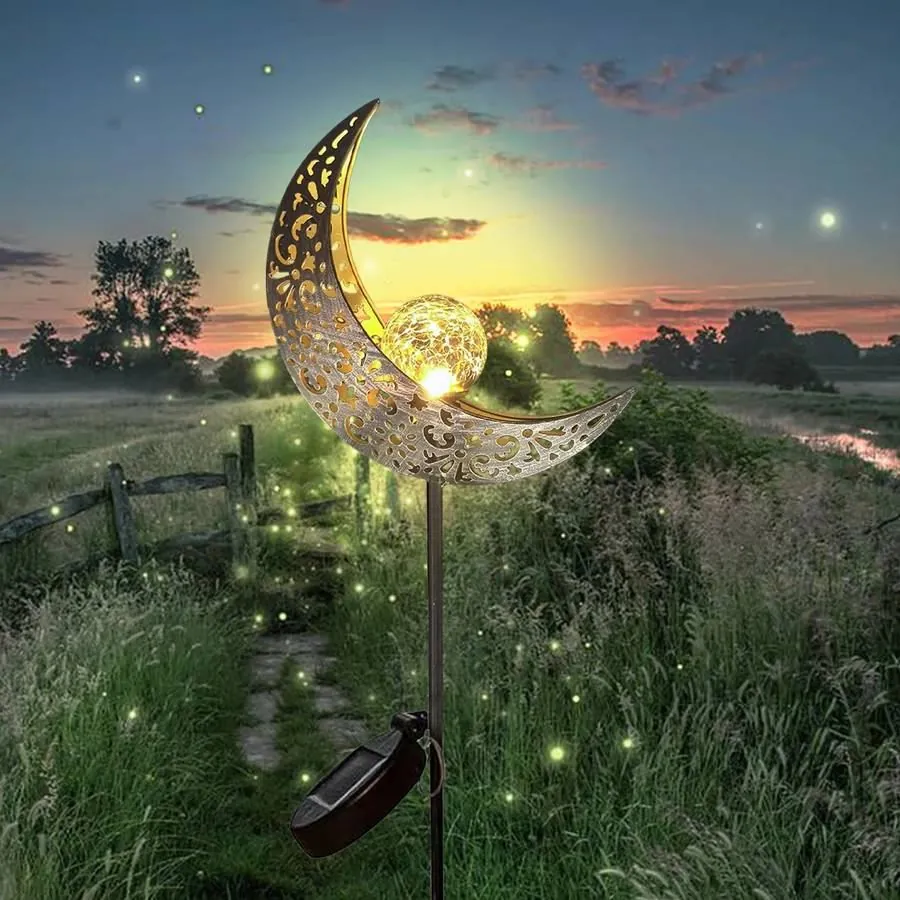
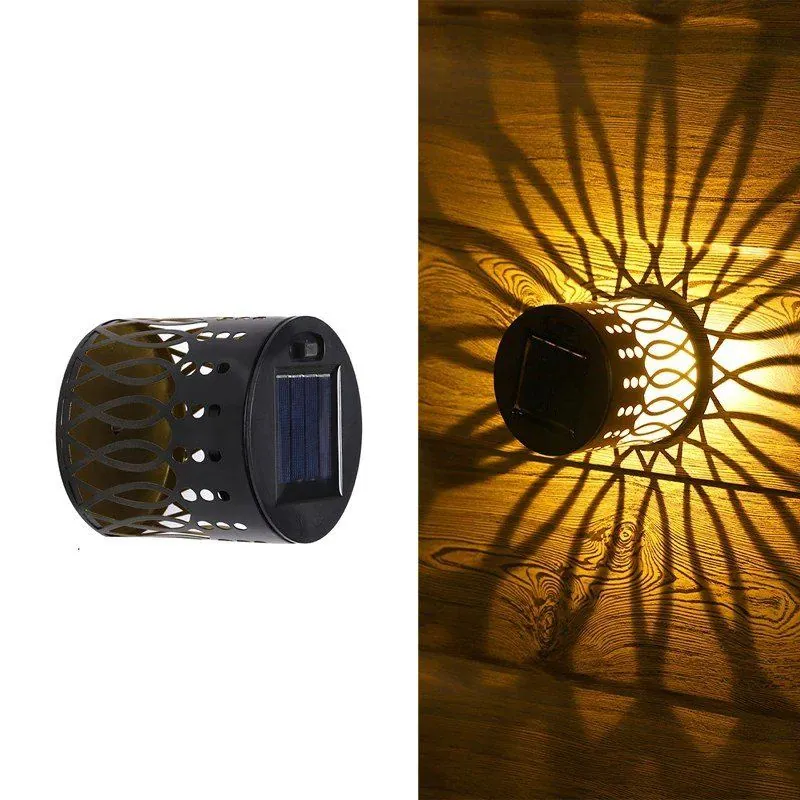
A soft stake light nearby does this with no cable at all - the solar guide is honest about what to expect in winter, and there is more in the solar range.
Test it first
Before buying anything, put a box, a bin or a stack of pots in the spot. Leave it a day or two and look at it from indoors.
You will learn two things: whether the position is right, and whether the size you had in mind is anywhere near big enough. It usually is not.
Focal points that are not ornaments
Worth saying, because it stops people buying something they did not need.
A focal point can be a plant with a strong shape, a bench, a pot, an arch, a bird bath, or a gap that frames a view of something beyond the garden. Any of those holds the eye if it has contrast and a background.
An ornament is often the easiest answer, particularly in winter, because it looks the same in January as in July and needs nothing done to it. That reliability is the real argument for one.
But if you already have a strong specimen plant or a good bench in the right place, adding an ornament nearby competes with it rather than helping. The best move there is nothing at all.
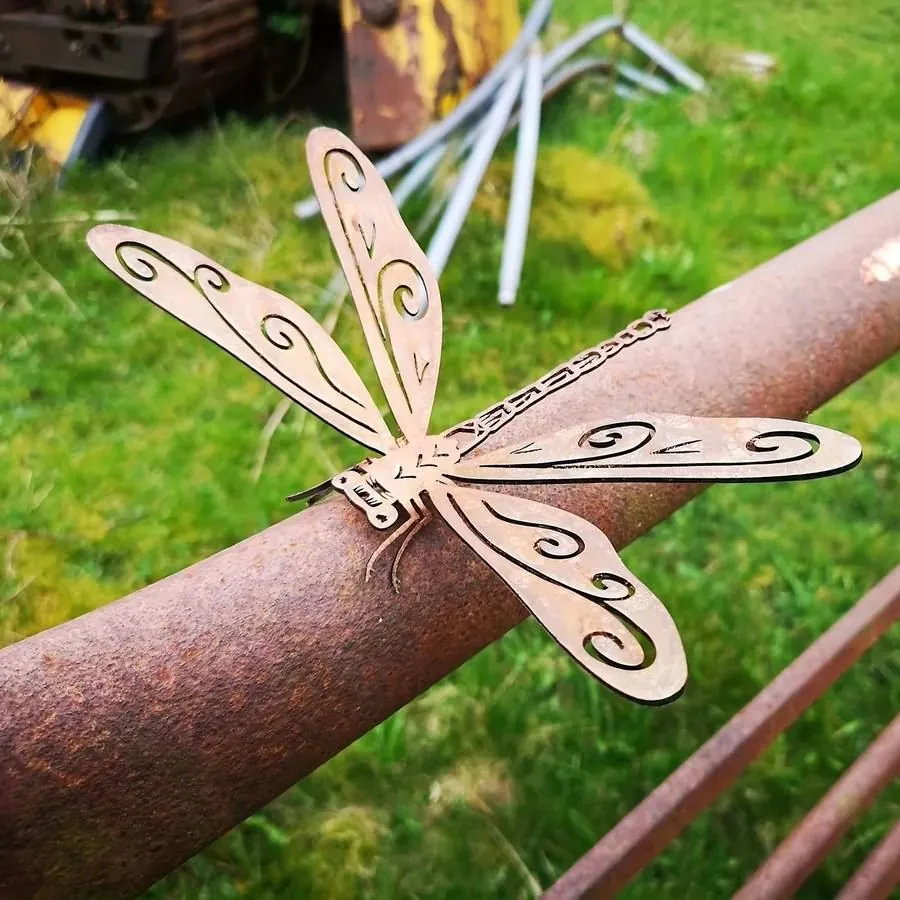
Browse statues and sculptures, modern pieces and unusual ornaments, with more in the complete guide and the current picks.
The short version
- Your focal point already exists - find where the eye stops and choose what occupies it.
- A piece holds attention through contrast of colour, form, texture or scale.
- A plain, ideally evergreen backdrop is what lets an outline read at all.
- Two focal points in one view compete; separate them so they are never seen together.
- Light it from the side, not head-on, or you flatten the shape you chose it for.
Frequently asked questions
How do I create a focal point in a garden?
Stand where you usually look at the garden from, notice where your eye stops on its own, and put the piece there. The focal point already exists - you are choosing what occupies it rather than inventing a new one.
What makes an ornament work as a focal point?
Contrast with what surrounds it, in colour, form, texture or scale. It only needs one of the four, but something that matches its setting in all of them will be invisible however handsome the piece itself is.
Can a garden have more than one focal point?
Only if they cannot be seen at once. Two focal points in the same view compete, and the eye bounces between them without settling. Separating them round a corner or behind a hedge also makes the garden feel larger.
Why does my statement piece not stand out?
Usually the background. A plain, dark backdrop such as a hedge, fence or wall is what makes an outline legible, whereas a mixed border dissolves the same shape into leaves by midsummer.
How should I light a garden focal point?
From the side rather than head-on. Front lighting flattens the shape, while light raking across it throws the texture and outline you chose the piece for. A single soft light nearby is enough.