

Quick answer: Choose a piece for its posture rather than its face - a bowed head or folded wings reads as stillness from any distance, while facial detail rarely survives casting well. Place it low and partly among planting, where it looks settled rather than displayed.
These are among the oldest garden figures there are. And they are still the ones people reach for when they want a space to feel calm rather than decorated.
What they carry, and what they do not
An angel or cherub reads as peaceful and reflective without stating anything. That is most of the appeal.
For some people the association is religious and that is the point. For many others it is not. The form has been part of European garden and churchyard decoration for a very long time. It has become a general symbol of stillness and remembrance rather than a statement of belief.
Both readings are fine, and neither needs explaining to anyone. That ambiguity is exactly why the form suits a memorial spot, where something explicit can feel like too much.
Posture over face
The single most useful buying advice.
Faces are hard. At ornament scale, in a cast material, facial detail is where pieces most often look wrong - slightly blank, slightly sentimental, or slightly off in a way that is hard to place.
Posture survives casting far better. A bowed head, folded wings, hands together, a figure seated with knees drawn up: these are the poses that work. All of them read as stillness from twenty paces. None depends on the face being good.
So look at the silhouette first, and treat the face as a secondary consideration. If the outline says what you want, the piece will work.
Sitting, kneeling, standing
Seated and kneeling figures read as settled and are the easiest to place. They sit low among planting and look as though they have been there a while.
Standing figures are more formal and need more space and a proper backdrop. They read as a statement rather than a presence.
Cherubs are lighter in tone and suit a border or a pot rather than a memorial spot, unless you specifically want that softer register.
The small garden guide covers siting a figure where space is tight.
Where to put one
Low and partly among planting, rather than raised and on show.
A seated figure at the edge of a border, with something growing over the base, looks settled. The same figure on a plinth in the open looks municipal.
Good positions: a quiet corner, beside a bench, at the end of a path, under a tree, against a hedge or wall. Somewhere you come across it rather than somewhere it announces itself.
Being visible from indoors is worth more than being visible from the whole garden, particularly if the piece is doing memorial work - the memorial corner guide covers that.
Planting around it
Soft and slightly overgrown suits these pieces better than tidy.
Ivy, ferns, hellebores, low grasses - anything that grows up around the base and softens the join between figure and ground. A figure standing on bare soil looks placed; one with planting at its feet looks rooted.
Evergreen matters here, because a memorial or quiet corner should not be bare in January, which is when it is most likely to be visited.
Materials
Cast stone and concrete are the traditional choice and by far the best for ageing. They gather lichen, soften in tone and look better every year, which suits the subject. The concrete guide covers keeping them off wet ground.
Resin holds finer detail and weighs a fraction as much, which matters if the piece is large. But it does not age - it fades - so a resin figure looks its best on day one. The resin guide covers slowing that down.
Metal is less common in this subject and reads more contemporary, which can be exactly right in a modern garden - the metal guide covers finishes.
Avoiding the sentimental version
These pieces sit close to a line, and a few things keep them on the right side of it.
Prefer simplified, weathered forms over highly finished glossy ones. Avoid heavy applied colour - a plain stone tone ages better and reads as quieter. And one figure, not a group; two cherubs facing each other is where a garden starts to look like a showroom.
The how-many guide covers restraint generally.
Care
Mostly leaving it alone. Do not pressure wash, do not bleach, and do not scrub the lichen off - on a figure, weathering is what makes it look established rather than bought.
Keep it off wet ground and out of standing water, which is a structural concern. And watch for water collecting in cupped hands or folded wings, because that is where frost damage starts. The stone cleaning guide has the method.
Wings, and the part that breaks
A practical note, because it is nearly always the wings that fail and it is worth knowing before you choose.
Wings project, they catch wind and sleeves, and on a cast piece they are the thinnest section. On a hollow resin figure with spread wings, a knock in the wrong place is a clean break.
Folded or close-held wings are far stronger and, to my eye, quieter looking. A seated figure with the wings gathered in is both the more durable choice and the gentler one.
Wings also hold water where they meet the back, which in a cold January is how a hairline crack starts. Worth tipping a piece to check that nothing cups, and clearing it out if it does.
For people who are not religious
Many people who would not call themselves religious still find these figures comforting, and occasionally feel they have no business choosing one.
They are welcome to. The form has been a general emblem of watchfulness and care in European gardens and churchyards for a very long time, well beyond any particular belief. And nobody is being asked to claim anything by owning one.
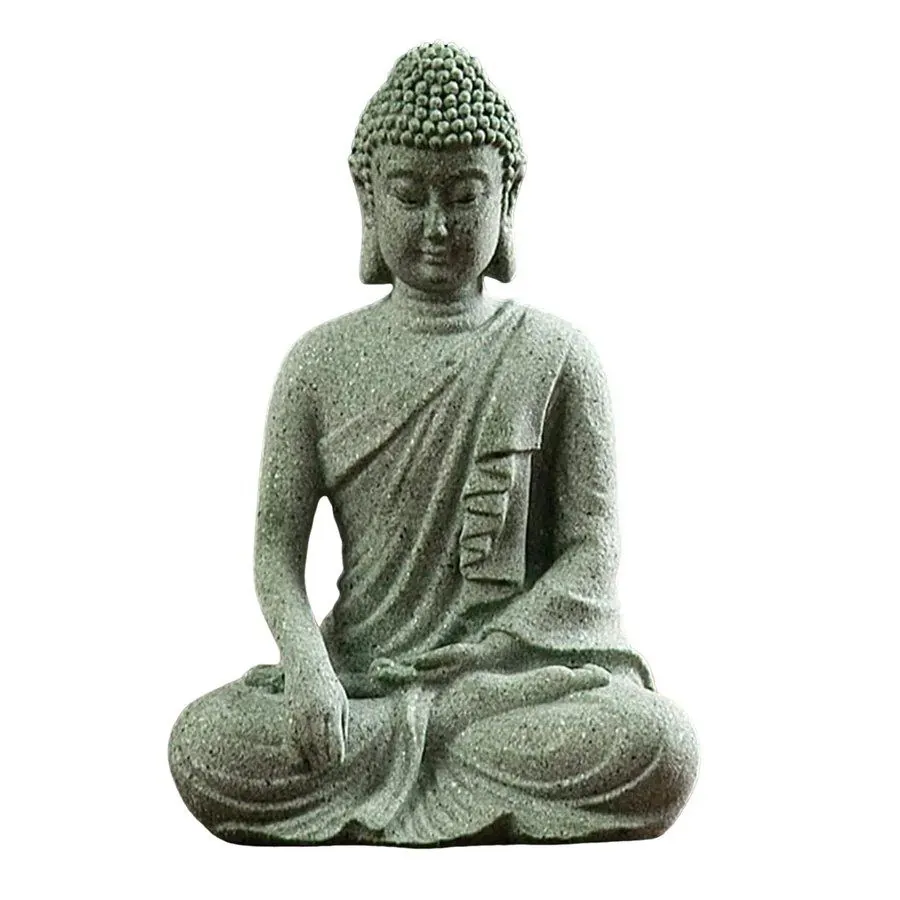
If it still does not sit comfortably, the same feeling comes from other quiet figures. A seated human form, a pair of cupped hands, a small bird, a simple sphere. All read as stillness without a specific reference.
The memorial and meaningful range and the memorial guide cover the alternatives if that is the more comfortable route.
Browse memorial and meaningful pieces, statues and sculptures and Buddha and spiritual ornaments, with more in the memorial guide.
The short version
- The form reads as stillness without stating anything, which is why it suits quiet spaces.
- Buy on posture, not the face - facial detail rarely survives casting at ornament scale.
- Seated and kneeling figures look settled; standing ones need space and a backdrop.
- Plant softly around the base, or a figure on bare soil looks placed rather than rooted.
- Watch for water collecting in cupped hands or folded wings - that is where frost starts.
Frequently asked questions
Are angel garden ornaments religious?
They can be read either way. For some people the association is explicitly religious, while for many others the form has been part of European garden and churchyard decoration so long that it simply reads as stillness and remembrance.
What should I look for in an angel or cherub ornament?
Posture rather than face. A bowed head, folded wings or a seated figure reads as stillness from a distance, while facial detail at ornament scale is where cast pieces most often look slightly wrong or sentimental.
Where should an angel ornament go in a garden?
Low and partly among planting rather than raised on a plinth, which looks municipal. A quiet corner, beside a bench, under a tree or against a hedge suits it, ideally somewhere visible from indoors in winter.
What material is best for an angel statue?
Cast stone or concrete, because they gather lichen and soften in tone so the piece looks better every year. Resin holds finer detail and weighs far less, but it fades rather than ages, so it looks its best on day one.
How do I stop an angel ornament looking sentimental?
Choose simplified, weathered forms over highly finished glossy ones, avoid heavy applied colour in favour of a plain stone tone, and use one figure rather than a matching pair, which is where it starts to look like a showroom.