

Quick answer: Robins are the most gifted garden ornament in Britain because of the widespread saying that robins appear when loved ones are near. Place one at eye level on a post, wall or perch rather than on the ground, where a small bird shape simply disappears.
Of everything in my garden, and there is a lot in my garden, the robin is the one people ask about. It is easily the most gifted ornament in Britain, and it is worth understanding why before you place one.
Where the meaning comes from
The phrase most people know is some version of "when robins appear, loved ones are near". It turns up on plaques, cards and memorial pieces everywhere.
It is a modern saying rather than an ancient one, but the association behind it is older. Robins are unusually bold with people - they follow a spade around a border in a way almost no other British bird does - so the sense of one keeping you company has a real basis in behaviour.
They are also visible in winter when almost nothing else is, and they sing through the cold months. A bird that shows up in December, alone, and comes close, was always going to gather stories.
That is why a robin ornament is so often a remembrance piece as well as a decorative one - the memorial guide covers that side gently.
Placement: get it off the ground
The single biggest mistake with robin ornaments.
A robin is a small bird, so a robin ornament is a small object. Put it on the ground among planting and it is invisible by June. Put it at eye level and it reads instantly.
Good spots: on a fence post, a wall top, a gate pillar, a tree stump, the edge of a raised bed, a windowsill, or perched on a hook or crook. Anywhere a real robin would actually sit, which is the useful test.
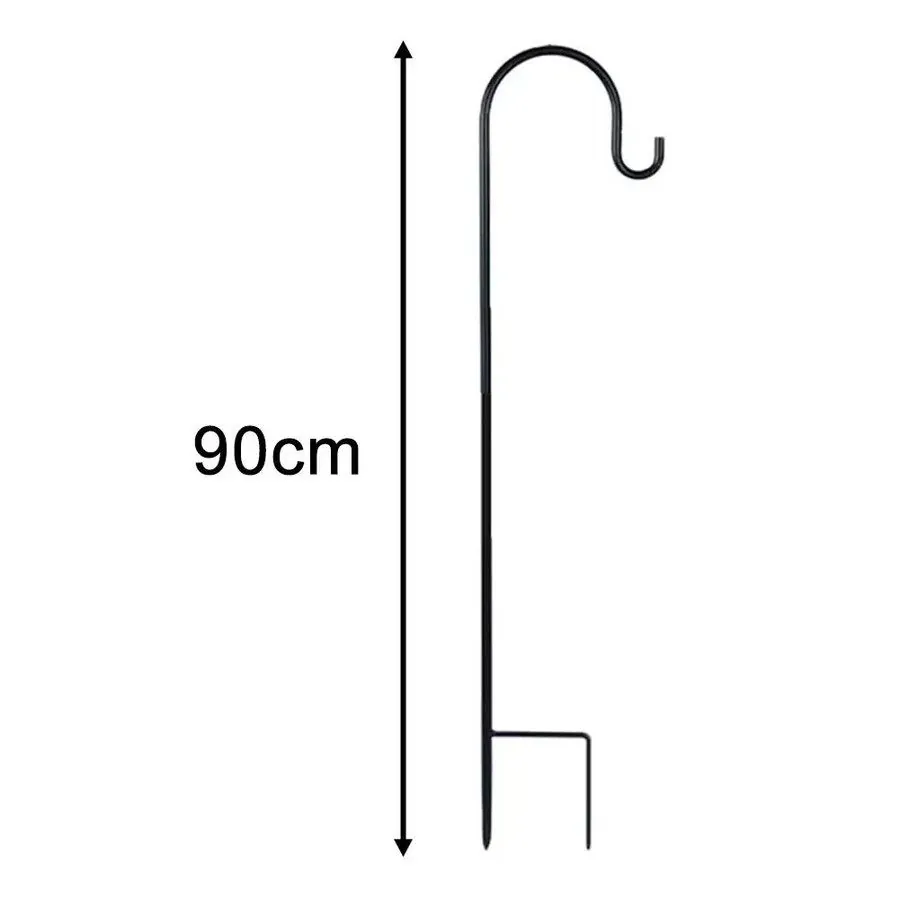
A shepherd's crook is a neat way to give a small piece height where there is nothing to sit it on.
Make it look like it landed
Two small things separate a robin that looks placed from one that looks stuck.
Angle it. Real birds do not face straight out. Turn it slightly, as if it noticed something.
Give it a reason to be there. Beside a bird bath, near a feeder, on the handle of a tool, at the edge of a bench. A robin on a bare post is an ornament; a robin on the arm of a bench looks like a moment.
And one at a time. Robins are famously territorial, and a row of six reads as stock rather than as a bird.
Materials, and what actually lasts
Robin ornaments come in resin, metal, and stone-effect composite. All three work outdoors, with caveats.
The thing to watch is paint. A robin's whole appeal is the red breast, and colour is what fades first outdoors - UV takes the reds before anything else. A piece in a sheltered spot, or under the edge of a shed roof, keeps its colour for years longer than one in full sun.
Metal pieces avoid the problem entirely by not relying on colour - the metal guide covers finishes - and the materials guide compares them all.
Encouraging the real thing
An ornament is a nice nod. If you want the actual bird, the useful things are simple.
Robins feed mostly from the ground and from open surfaces rather than hanging feeders, so a flat tray or a low table suits them. They take mealworms readily. And water matters as much as food, particularly in a freeze - a bird bath or small water feature earns its place.
Cover nearby is the other half of it: a shrub or hedge within a short flight gives a small bird somewhere to retreat to, and they will use an open feeding spot far more readily if it exists.
Grouping and gifting
Robins pair well with the rest of the garden-bird pieces rather than with each other - see the bird and robin range and animal ornaments.
If it is a gift, think about where the person will put it before choosing the size. Something small and wall-mounted suits a courtyard; something larger suits a border. And a robin given as a remembrance piece wants somewhere quiet rather than somewhere prominent - the gift guide has more.
The other garden birds
Robins get the attention, but the same placement logic applies across the whole family, and a mixed group reads better than a row of robins.
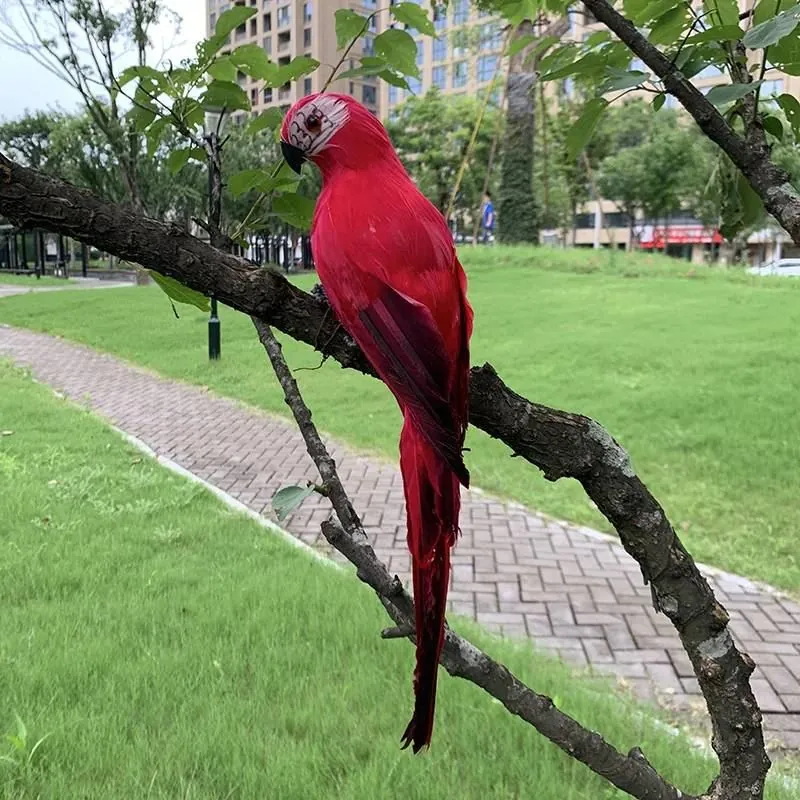
Blackbirds and wrens suit lower positions - the base of a hedge, the edge of a border - because that is where the real birds feed. Owls belong higher, on a post or a wall, which is also where an owl ornament reads best as a silhouette.
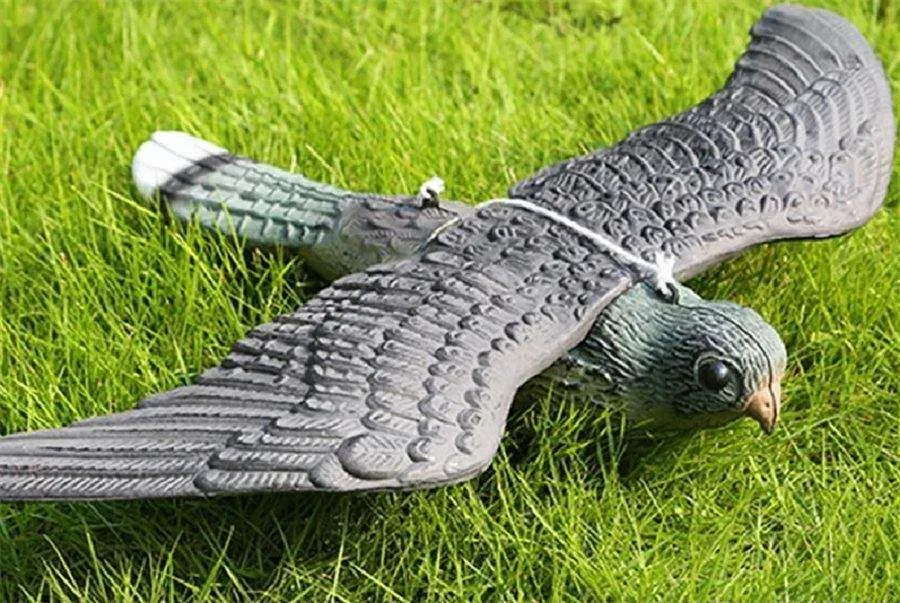
Larger birds want more distance around them. A heron or a big decoy piece placed close to a path just looks oversized; the same piece at the far end of a pond looks right.
Mixing sizes and heights across a garden is what makes a bird collection feel like wildlife rather than like stock, and it stops any one piece having to carry the whole idea.
Browse bird and robin ornaments and the animal range, with more in the animal ornaments guide.
The short version
- The 'when robins appear' saying is modern, but the boldness behind it is real behaviour.
- Place a robin at eye level - on a post, wall or perch - never down among planting.
- Angle it slightly and give it a reason to be there, like a bench arm or a bird bath.
- Red paint fades first outdoors, so sheltered spots keep the colour years longer.
- For the real bird: ground or tray feeding, mealworms, water, and cover within a short flight.
Frequently asked questions
What do robin garden ornaments mean?
They are usually associated with remembrance, from the widely repeated saying that when robins appear, loved ones are near. It is a modern phrase, but it draws on how boldly real robins approach people and how visible they are in winter.
Where should I put a robin ornament?
At eye level, on a fence post, wall top, gate pillar, tree stump or hook. A robin is a small object, so placed on the ground among planting it disappears by midsummer. Put it anywhere a real robin would actually perch.
How do I make a robin ornament look natural?
Angle it slightly rather than facing it straight out, since real birds never sit square on. Then give it a reason to be there - the arm of a bench, the handle of a tool, the edge of a bird bath - and use only one.
Will the red on a robin ornament fade?
Reds fade first outdoors because UV attacks them fastest, so a painted robin in full sun loses colour noticeably sooner than one in a sheltered spot. Under the edge of a shed roof or a tree, the colour lasts years longer.
How can I attract real robins to the garden?
Feed them from a flat tray or low table rather than a hanging feeder, since robins prefer ground and open surfaces, and offer mealworms. Provide water, especially in a freeze, and make sure there is cover within a short flight.