

Quick answer: Hanging pieces usually charge better than ground ones because they sit above shading planting, but they take far more wind. Fix to a post rather than a fence panel, allow for swing, and check cords and hooks each spring.
Hanging is the most underused position for solar in a British garden. It solves the problem that spoils most ground-level pieces.
Why hanging charges better
Ground-level solar spends its life being shaded - by planting that grows up around it in summer, by the fence in winter when the sun is low.
A piece hanging at head height or above is clear of all that. It sits above the planting line, catches sun for more of the day, and is far less affected by the long shadows that make winter so difficult - the problem the winter solar guide describes.
If a solar piece has disappointed you at ground level, hanging the same thing is often the whole fix.
Fix to something structural
The most common failure, and it is always the fixing rather than the ornament.
Fence panels are not structural. They flex. And a hanging weight swinging in wind will pull a screw out of a thin panel. Fix into the posts, which is where the strength is.
Brick: drill into the brick rather than the softer mortar, with a plug rated for the load.
Trees: use a strap or a padded loop around a branch rather than a screw. Screwing into a living tree creates an entry point for disease. And the tree will grow around and eventually engulf a fixing.
Pergolas and beams: ideal, and the easiest of the lot.
A shepherd's crook is the free-standing answer where there is nothing to fix to. And it can be moved to follow the sun.
Allow for swing
The thing nobody plans for.
A hanging piece does not stay where you hung it. In wind it swings, and anything within its arc gets hit repeatedly - a wall, a fence post, another ornament, a window.
Hang things at least their own length clear of any hard surface. Check the arc by pushing it gently and watching where it goes.
This is also what breaks pieces: not the weather, but hundreds of small impacts over a winter.
Weight and cords
Hanging pieces carry more risk than ground ones because a failure means something falling.
Check the cord or chain each spring. Natural fibre cord weakens with age and UV, and cheap chain rusts through at the link that takes the load.
Check the hook too, particularly on a tree branch, where growth can distort a fixing over a couple of years.
And keep the weight sensible. A heavy piece on a long cord generates a lot of force when it swings.
What suits hanging
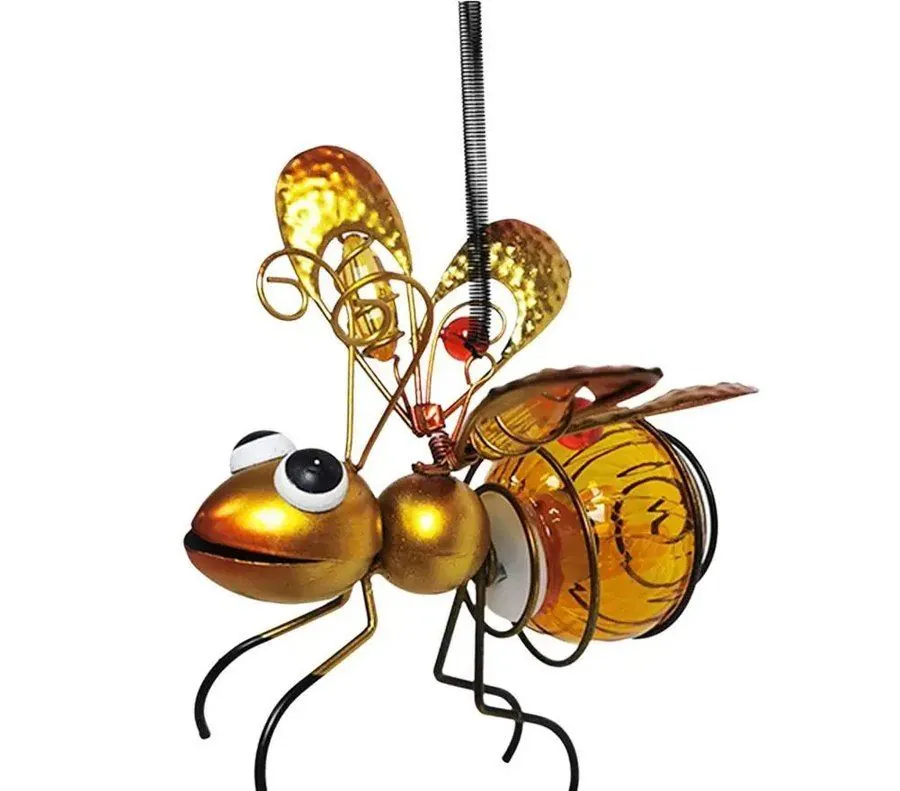
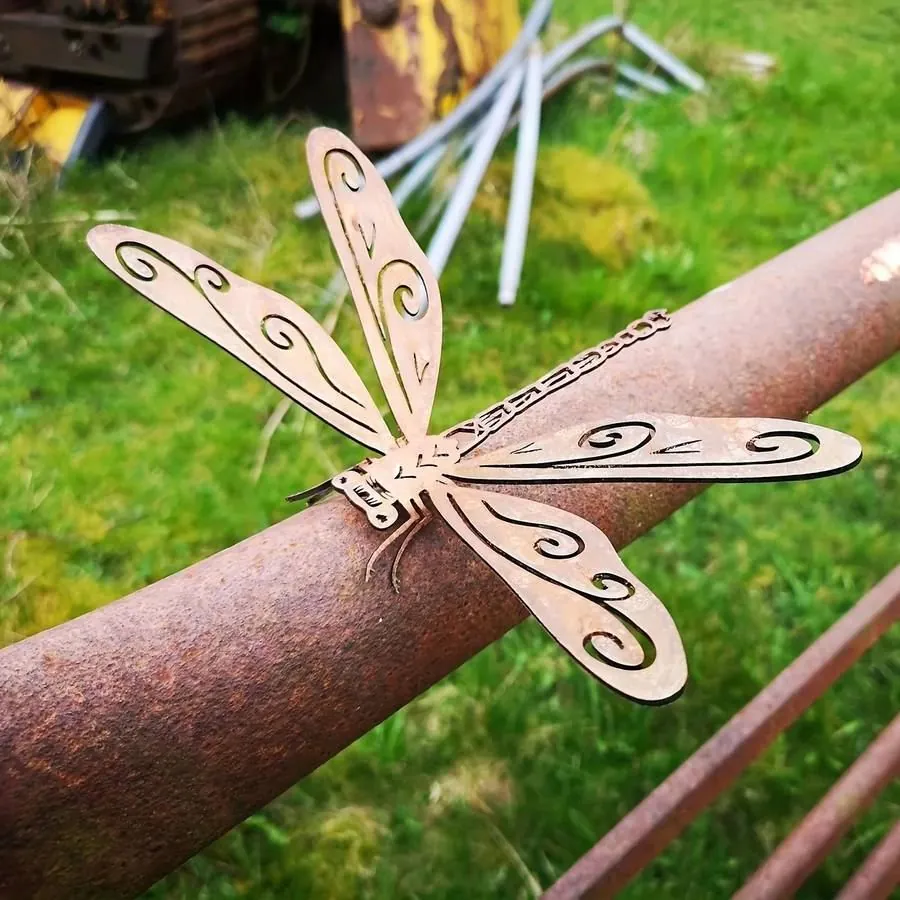
- Insects and translucent shapes. Light through a wing looks right - a hanging bee is the type. And the solar animals guide covers what works lit.
- Lanterns and orbs. The classic, and they read from a distance.
- Wind chimes with a light. Sound and light together, both of which suit a hanging position.
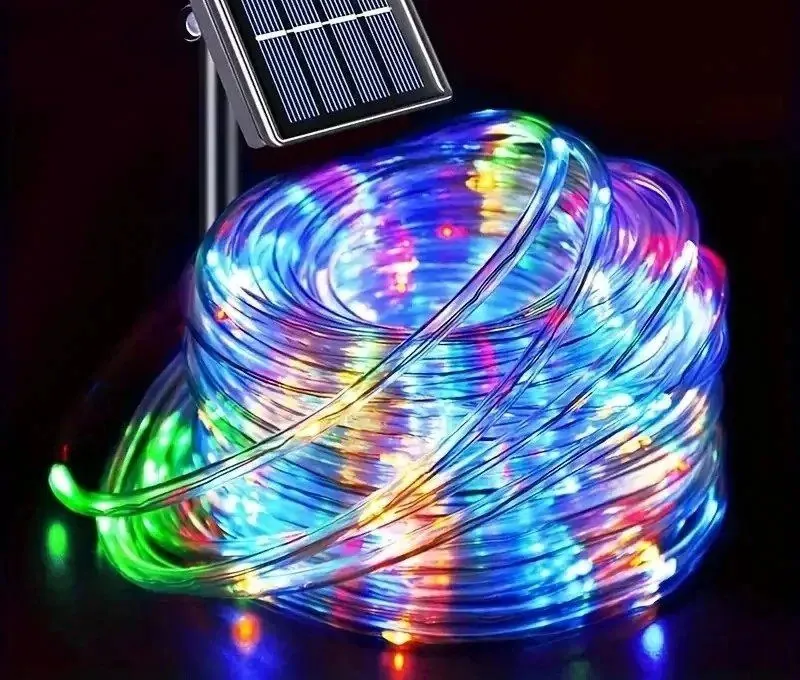
- Rope and string lights through a tree - rope lights give a broad soft effect rather than a point source.
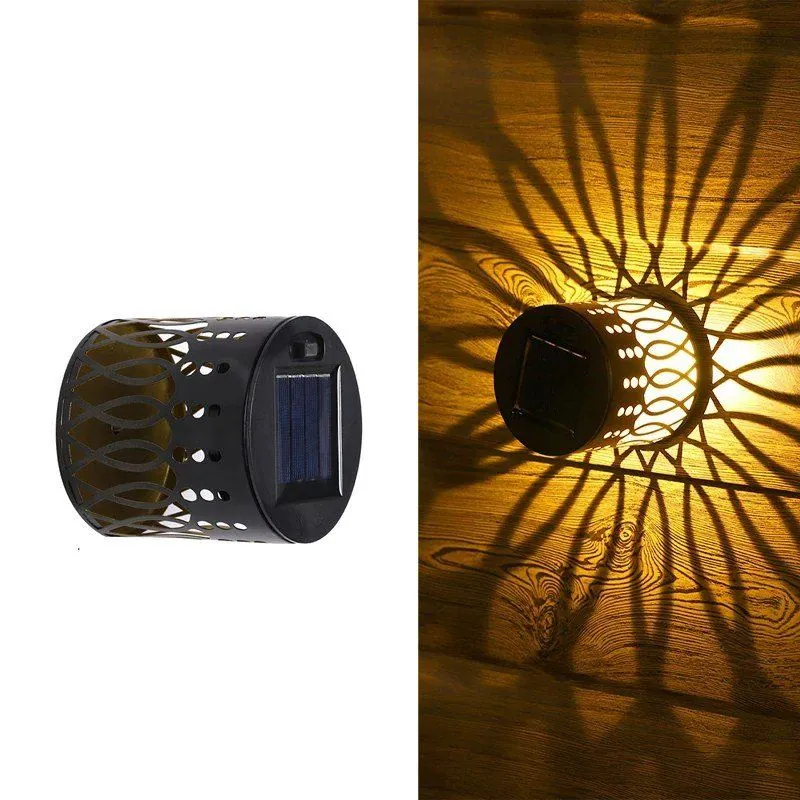
- Fence-mounted panels that light a wall rather than hang from it - a mandala light avoids the swing problem entirely.
Height
Roughly eye level or a little above is the sweet spot for most pieces.
Higher and the detail is lost and the light shines over your head rather than into the space. Lower and it becomes something to walk into, particularly in the dark, which is exactly when these are working.
Keep them off walking lines entirely if you can - beside a path rather than over it.
Grouping them
Three at staggered heights along a fence or under a tree reads far better than three in a line at the same level.
Vary the drop lengths noticeably rather than slightly. And leave stretches with nothing, so the group is distinct from the rest - the same discipline as in the hanging ornaments guide.
Winter
Hanging pieces take the worst of the wind. So autumn is the time to check every fixing and cord before the gales rather than after.
Bring down anything with fine painted detail or a fragile shade. Leave robust lanterns and metal pieces up - they are doing useful work in a dark garden. And the overwintering guide covers what else needs attention.
Sound as well as light
Hanging is the one position where an ornament can reasonably make a noise, and it is worth considering.
A chime gives a garden a voice on a still evening, and hung near a seat it becomes part of sitting out rather than something you look at. Lower-toned chimes carry better and irritate less than bright high ones.
The caveat is exposure. In a windy spot, a chime that is charming in June is relentless in November, so hang it where it will be stirred rather than driven, and be prepared to take it down for the winter.
Hanging from a living branch without damaging it
Trees get hurt by hanging things more often than people realise, and almost always by the same two mistakes.
The first is wire or thin cord straight over the bark. As the branch thickens, the cord cuts in. And a line that was loose in April can be girdling a young branch within two seasons.
The second is hanging from this year's growth. Thin new wood bends, then stays bent, and you end up with a permanently drooping branch.
So use a wide soft strap or a length of old hose over the cord, and hang from wood at least as thick as your thumb. Check the loop each spring and let it out if it has tightened.
Where there is no suitable branch, a crook hook pushed into the border gives you a hanging point wherever you want one and harms nothing.
What a hanging piece sounds like at night
Something nobody thinks about until the first windy night, and then thinks about a great deal.
Anything hanging will move, and anything that moves near a hard surface will tap. A light swinging against a fence panel at two in the morning is a genuinely annoying sound. It carries into a bedroom better than you would believe.
Two fixes. Hang clear of any surface by at least a hand's width in every direction, including when it swings. And check what the fitting itself does - metal hooks on metal brackets click, which is a separate noise from the tapping.
Where you actively want the sound, that is what a chime is for. The wall and hanging range has both the quiet and the deliberately noisy options.
Browse wall and hanging ornaments, solar pieces and unusual ornaments, with more in the solar guide.
The short version
- Hanging pieces charge better because they sit above shading planting and low winter sun.
- Fix into fence posts, brick rather than mortar, or a padded strap on a tree - never a panel.
- Allow at least the piece's own length of clearance, or swing will destroy it over a winter.
- Check cords, chains and hooks each spring; natural fibre and cheap chain fail with age.
- Hang at eye level or just above, and keep pieces beside walking lines rather than over them.
Frequently asked questions
Do hanging solar ornaments charge better?
Usually yes. A piece at head height sits above the planting that shades ground-level solar in summer, and above the long shadows cast by low winter sun, so it catches useful light for far more of the day.
How do I hang an ornament on a fence?
Fix into the posts rather than the panels. A panel flexes, and a swinging weight will eventually pull a screw straight out of thin timber. Posts are the structural part and will hold a hanging load properly.
Can I hang an ornament from a tree?
Yes, using a strap or a padded loop around a branch rather than a screw. Screwing into a living tree creates an entry point for disease, and the tree will grow around and eventually engulf any fixing left in place.
Why do hanging ornaments break?
Usually swing rather than weather. In wind a piece hits whatever is within its arc - a wall, a post, another ornament - hundreds of times over a winter. Hang things at least their own length clear of any hard surface.
How high should I hang a garden ornament?
Around eye level or a little above for most pieces. Higher and the detail is lost and the light shines over your head; lower and it becomes something to walk into in the dark, which is exactly when it is working.